


Refinance Mortgage No Closing Costs: Your Ultimate Guide for 2025
December 2, 2025
Learn about refinance mortgage no closing costs. Your ultimate guide for 2025 covers options, benefits, costs, and strategies for saving money.

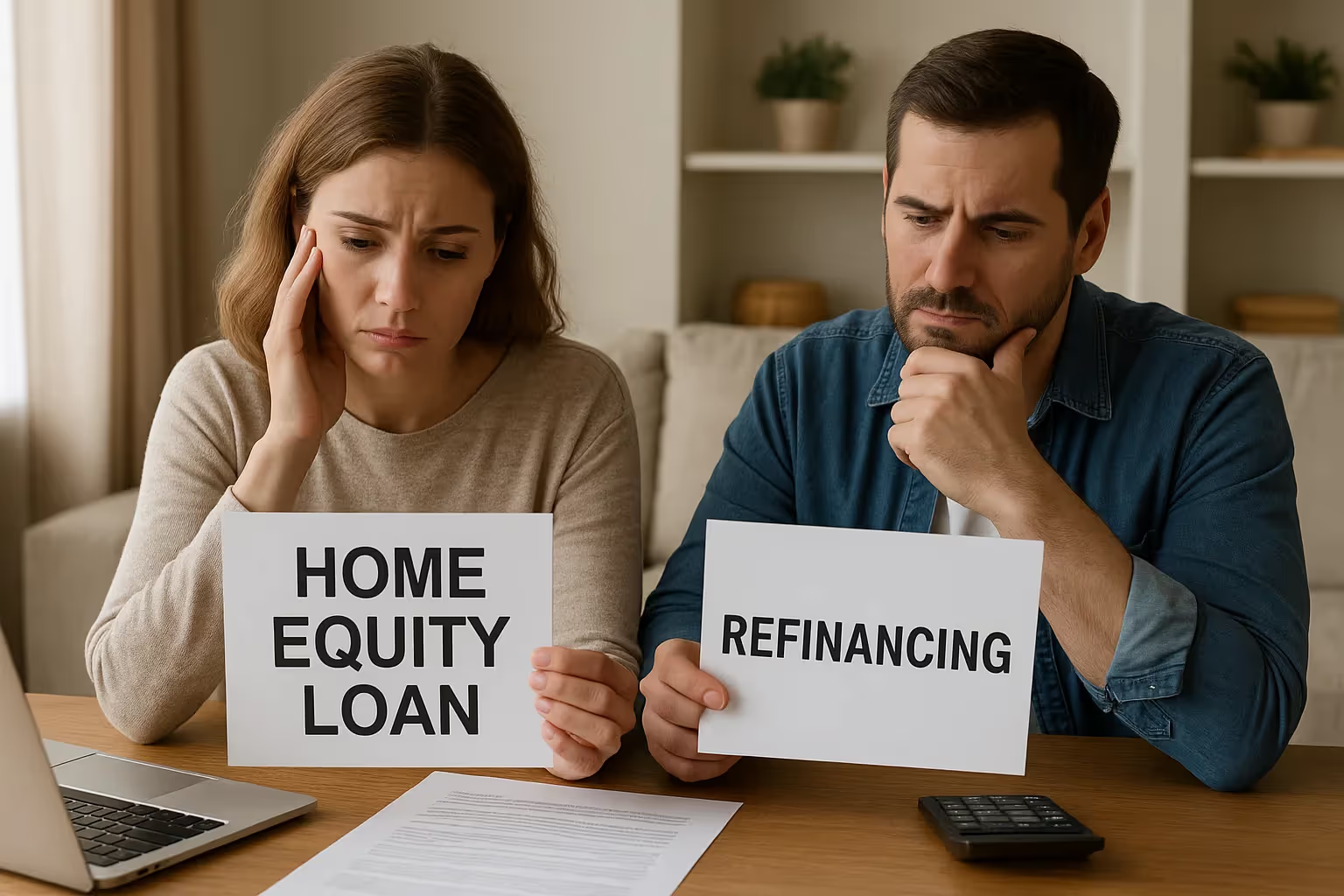
Thinking about refinancing your mortgage in 2025? Maybe you've heard about options where you don't have to pay anything upfront. That's right, a refinance mortgage no closing costs can sound pretty sweet. It means you could potentially lower your monthly payments or get cash without digging into your savings right away. But like anything, there's more to it than just the headline. Let's break down what these 'no closing cost' deals really mean and if they're the right move for your wallet.
Key Takeaways
- A 'no closing cost' refinance doesn't mean it's free; the costs are usually rolled into your loan or covered by a slightly higher interest rate.
- This option can be good if you need immediate monthly savings but don't have cash for upfront fees, or if you plan to move before the higher rate significantly impacts you.
- Be aware that accepting a higher interest rate to avoid closing costs can mean paying more interest over the life of the loan.
- Always calculate your break-even point to understand how long it will take for your savings to offset the increased interest costs.
- Consider your long-term financial goals and how long you plan to stay in your home before deciding if a no closing cost refinance is the best strategy.
Understanding No Closing Cost Refinance Options

So, you're thinking about refinancing your mortgage, but the idea of paying a bunch of fees upfront makes your stomach churn. That's where the "no closing cost" refinance option comes in. It sounds pretty sweet, right? Like magic, all those pesky fees just disappear. But like most things that sound too good to be true, there's usually a bit more to the story.
What Does No Closing Cost Refinance Truly Mean?
When a lender advertises a "no closing cost" refinance, it doesn't mean they're suddenly doing this out of the goodness of their hearts. Instead, they're rolling those costs into your loan. Think of it like this: instead of paying $5,000 or $10,000 in fees today, that amount gets added to your mortgage balance. So, your loan amount goes up, and you'll end up paying interest on that amount over the life of the loan. The key takeaway is that the costs aren't eliminated; they're just deferred and financed. This can be a good thing if you don't have the cash on hand right now, but it's important to know you're paying for it one way or another.
When a No Closing Cost Refinance Makes Financial Sense
This type of refinance can be a smart move in a few specific situations. If you're planning to sell your home or refinance again relatively soon, say within a couple of years, avoiding those upfront fees can be a big win. You get the benefit of a lower interest rate or monthly payment without having to recoup a large initial investment. It's also a lifesaver if you need to lower your monthly payments but simply don't have the savings to cover closing costs. It opens the door to savings that might otherwise be out of reach.
Here are a few scenarios where it might make sense:
- Short-term Homeownership: You plan to move or sell within 1-3 years.
- Immediate Cash Flow Needs: You need to lower your monthly payments now but can't afford upfront fees.
- Limited Savings: You don't have a significant amount of money saved for closing costs.
The Trade-Offs of Eliminating Upfront Fees
As we touched on, the main trade-off is that you'll likely end up paying a slightly higher interest rate than you would if you paid the closing costs out of pocket. Lenders compensate for taking on those costs themselves by charging you a bit more over time. This means while your monthly payment might be lower, you could end up paying more interest over the entire life of the loan compared to a refinance where you pay the fees upfront and get the absolute lowest rate possible. It's a classic balancing act between immediate affordability and long-term cost.
Evaluating the Benefits of a No Closing Cost Mortgage Refinance

Immediate Monthly Savings Without Upfront Investment
One of the biggest draws of a no closing cost refinance is that you can start saving money right away. You don't need a pile of cash ready to go for things like appraisal fees, title insurance, or lender origination charges. This means if you qualify, your monthly mortgage payment could drop without you having to spend anything out of pocket to make the change happen. It's like getting a discount on your mortgage without having to pay for the discount upfront.
Accessing Equity Without Immediate Outlay
Sometimes, you might need to tap into the equity you've built up in your home. Maybe you have a big repair bill, or you want to consolidate some high-interest debt. A no closing cost refinance can sometimes allow you to do this. You might be able to get some cash out of your home's value, and because the closing costs are covered, you don't have to pay those fees right then. This can be a big help if you need funds but don't have savings to cover the refinance expenses.
Simplifying Your Mortgage Payments
Beyond just saving money, refinancing can simplify things. If you're currently dealing with an adjustable-rate mortgage that keeps changing, switching to a fixed-rate loan through a no closing cost refinance can bring predictability. You'll know exactly what your payment will be each month, which makes budgeting a lot easier. Plus, if you can combine your mortgage with other debts or simply get a clearer payment schedule, it can just make managing your home loan feel less complicated overall.
It's important to remember that 'no closing cost' often means the lender is rolling those costs into your loan or giving you a slightly higher interest rate. So, while you save money upfront, you might pay a bit more over the long run. Always check the details to see if the immediate savings are worth the potential long-term costs.
Navigating the Costs Associated With Refinancing
Even when you're aiming for a "no closing cost" refinance, it's smart to know what fees could pop up. Sometimes, these costs are rolled into your loan, meaning you'll pay them over time with interest, or the lender might cover them in exchange for a slightly higher interest rate. Understanding these potential expenses helps you see the full picture.
Understanding Potential Lender Fees
Lenders often have their own set of fees. These can include things like an application fee, which covers the initial processing of your loan request, or an origination fee. The origination fee is usually a percentage of the loan amount and compensates the lender for setting up the new mortgage. While some "no closing cost" deals might waive these, it's worth asking what's included and what's not. Sometimes, a lender might offer to pay these fees for you, but they'll likely make up for it elsewhere, often through a higher interest rate.
The Role of Appraisal and Legal Services
Your lender will almost certainly want an updated appraisal of your home to confirm its current market value. This typically costs a few hundred dollars. You'll also need legal services to finalize the paperwork. A lawyer or notary public will review and sign off on the new loan documents, which can add another few hundred to over a thousand dollars to the cost. In a true no-closing-cost refinance, these might be absorbed by the lender, but it's good to be aware of them.
Mortgage Prepayment Penalties Explained
This one's a bit different. If you're breaking out of your current mortgage early to refinance, your existing lender might charge you a prepayment penalty. This isn't technically a closing cost for the new loan, but it's a cost associated with the act of refinancing. These penalties can be calculated in a couple of ways, often as a set number of months' worth of interest or based on an "interest rate differential" (IRD), whichever is higher. It's a fee to compensate the lender for the interest they expected to earn over the full term of your original loan. You need to factor this in to see if refinancing still makes sense financially.
It's easy to get caught up in the idea of saving money each month, but remember that refinancing is a financial transaction. Like any transaction, there are costs involved, even if they aren't paid directly out-of-pocket at the closing table. Always ask for a detailed breakdown of all fees and understand how they impact your overall loan cost and repayment timeline.
Determining If Refinancing Is the Right Financial Move
So, you're thinking about refinancing. That's great! But before you jump in, it's smart to figure out if it actually makes sense for your wallet. It's not just about getting a lower monthly payment; you've got to look at the whole picture.
Calculating Your Break-Even Point
This is a big one. Think of it like this: how long will it take for the money you save each month to cover all the costs you paid to refinance? If you refinance and it costs you $5,000 in fees, but you only save $100 a month, it'll take you 50 months (that's over 4 years!) to break even. If you plan to sell your house before then, you'd actually lose money on the deal.
Here’s a quick way to think about it:
- Calculate total closing costs: Add up all the fees you'll pay upfront.
- Figure out your monthly savings: Subtract the new monthly payment from your old one.
- Divide total costs by monthly savings: This gives you the number of months to break even.
Let's say you have $6,000 in closing costs and save $150 per month. That's 40 months, or about 3 years and 4 months, to break even. If you plan to move or refinance again before that break-even point, it might not be worth it.
Aligning Refinancing with Your Long-Term Goals
What are you trying to achieve with your mortgage? Refinancing can help with different things, but you need to pick the option that matches what you want.
- Lowering Monthly Payments: If your main goal is to free up cash each month, you might look at a longer loan term or a lower interest rate. Just remember, a longer term means you'll pay more interest over the life of the loan.
- Paying Off Your Mortgage Faster: Want to be mortgage-free sooner? You could refinance into a shorter loan term. This usually means higher monthly payments, but you'll save a ton on interest.
- Accessing Home Equity: Need cash for a big project, like a renovation or paying off other debts? A cash-out refinance lets you borrow against your home's value. Be careful with this, though – you're increasing your loan balance.
- Switching Loan Types: Maybe you have an adjustable-rate mortgage and want the stability of a fixed rate, or you want to get rid of private mortgage insurance (PMI). Refinancing can help with that.
Comparing Savings Against Refinancing Expenses
This is where you crunch the numbers. You need to see if the potential savings really outweigh the costs. Sometimes, even a small drop in interest rate can save you thousands over time, especially on a large loan balance. But if the closing costs are high, you need to be sure you'll be in the home long enough to see those savings add up.
Consider this scenario:
In this example, Option 1 saves you more each month and over the long run, but it takes over six years to recoup the costs. Option 2 has lower monthly savings but starts saving you money right away, which might be better if you plan to move sooner.
It's easy to get caught up in the idea of a lower interest rate, but always do the math. Make sure the savings you'll get from refinancing will actually put you in a better financial spot, especially when you consider how long you plan to stay in your home and how long it will take to make back any upfront fees.
Strategies for Securing a No Closing Cost Refinance
So, you're looking to refinance without shelling out a bunch of cash upfront. That's totally doable, but it means being smart about how you approach lenders. It's not just about finding a lender who says 'no closing costs'; it's about understanding the deal and making sure it actually works for you.
Negotiating Lender-Paid Closing Costs
This is probably the most direct way to get a no closing cost refinance. Basically, you're asking the lender to cover those fees – things like appraisal fees, title insurance, and recording fees. The key here is that the lender will likely roll these costs into your loan balance or offer you a slightly higher interest rate. It's a trade-off, so you need to figure out which works best for your budget. Sometimes, you can negotiate a specific amount the lender will pay. It's all about the conversation and what the market allows.
Considering a Slightly Higher Interest Rate
This goes hand-in-hand with the lender-paid closing costs. If the lender agrees to pay your closing costs, they're not doing it out of the goodness of their heart. They'll often compensate by giving you an interest rate that's a bit higher than the absolute lowest rate they might offer if you paid closing costs yourself. For example, you might see a rate that's 0.25% or 0.5% higher. You need to run the numbers to see if the monthly savings from avoiding upfront costs outweigh the extra interest you'll pay over time. It might be worth it if you plan to move or refinance again before the break-even point.
Leveraging Mortgage Professional Expertise
Don't try to do this all on your own. Mortgage brokers or loan officers who specialize in refinances can be super helpful. They know the market, they have relationships with different lenders, and they can often find deals you wouldn't find yourself. They can explain the nuances of lender-paid closing costs versus rolling costs into the loan. Think of them as your guide through the process. They can also help you compare offers from different lenders, making sure you're not missing out on a better deal or getting stuck with hidden fees.
Here's a quick look at how a slightly higher rate might play out:
Remember, even if you avoid upfront closing costs, the lender still needs to make money. This usually means a slightly higher interest rate. It's a balancing act between immediate savings and long-term costs. Always ask for the Loan Estimate to see all the fees and compare rates carefully.
When Refinancing Might Not Be Advantageous
Sometimes, refinancing your mortgage might seem like a good idea, but it doesn't always add up financially. It's not a one-size-fits-all solution, and a "no closing cost" option can sometimes hide downsides that make it less appealing than it first appears. Let's look at a few scenarios where hitting the refinance button might not be the smartest move for your wallet.
Situations Where Refinancing Increases Total Interest
While the goal of refinancing is usually to save money, it's possible to end up paying more interest over the life of your loan. This often happens when the interest rate reduction isn't significant enough to offset the costs, especially if those costs are rolled into the loan. A "no closing cost" refinance might achieve this by offering a slightly higher interest rate than you could get if you paid those costs upfront. Over many years, that small difference can add up.
Consider this example:
As you can see, while both options lower your monthly payment, only the first one, with a larger rate drop, actually saves you money in the long run. The second option, which might be closer to a "no closing cost" deal with a smaller rate concession, ends up costing you more over time.
The Impact of Short-Term Homeownership Plans
If you don't plan on staying in your home for a long time, refinancing might not be worth the effort or the hidden costs. Refinancing essentially resets your loan term. If you're only a few years away from paying off your current mortgage, starting a new 15- or 30-year term means you'll be paying interest for much longer than you would have otherwise. Even with a "no closing cost" refinance, if you move or refinance again before you've recouped the costs (even if they're rolled into the loan), you could end up losing money.
- Short Payoff Period: If you plan to sell your home within the next 1-3 years, the break-even point for your refinance costs might fall after you've already moved.
- Significant Equity Built: If you've paid down a large portion of your original loan, restarting the clock with a new loan term could be financially disadvantageous.
- Minimal Rate Improvement: If the interest rate difference is very small, the savings might not justify the administrative hassle and potential for increased long-term interest.
Refinancing is a tool for long-term financial planning. If your immediate future involves moving or significant life changes, it's wise to carefully consider if the benefits will truly materialize before you commit.
When Your Credit Score May Qualify You for Better Terms
Your credit score plays a big role in the interest rate you'll be offered. If your credit score has taken a hit since you got your current mortgage, or if it was never particularly high to begin with, you might not qualify for the best rates. Lenders see a lower credit score as a higher risk, and they'll compensate for that risk with a higher interest rate. In this situation, a "no closing cost" refinance might still come with a rate that's not much better, or even worse, than your current one. It might be more beneficial to focus on improving your credit score first. This could involve paying down debts or correcting any errors on your credit report. Once your score improves, you'll be in a much better position to secure a competitive rate when you do decide to refinance. Some government-backed loans, like FHA Streamline Refinances, don't even require a credit check, which could be an alternative if your credit isn't stellar.
Wrapping It Up
So, refinancing your mortgage without paying closing costs might seem like a dream, but it's good to know the whole picture. Sometimes, you trade a slightly higher rate for that convenience, which could mean paying more interest over time. It really comes down to your personal situation – how long you plan to stay in your home, your budget for monthly payments, and whether you have cash saved up for those upfront fees. If you're looking for immediate savings and can't swing the closing costs right now, a no-closing-cost refinance could be a smart move. But if you're in it for the long haul and can afford the initial expenses, grabbing the absolute lowest rate might save you more cash down the road. Take a good look at your numbers, think about your goals, and decide what makes the most sense for your wallet.
Frequently Asked Questions
What does 'no closing cost refinance' really mean?
It means you can refinance your mortgage without paying any fees upfront. The lender usually covers these costs, but they might add them to your loan amount or charge a slightly higher interest rate in return. So, while you don't pay cash at the closing table, the costs are still there, just spread out.
When does a no closing cost refinance make sense?
This option is great if you want to lower your monthly payments or interest rate but don't have the savings for upfront fees. It's especially good if you plan to move or refinance again relatively soon, as you won't have paid a lot of closing costs before making your next move.
Are there any hidden costs with a no closing cost refinance?
Sometimes. The lender might roll the closing costs into your loan, meaning you'll pay more interest over time. Or, they might offer a slightly higher interest rate than they would if you paid the closing costs yourself. It's important to compare these offers carefully.
How much can I save by refinancing without closing costs?
The savings depend on how much your interest rate drops and how long you keep the new mortgage. Even a small rate decrease can save you money each month. Since there are no upfront costs, your savings start right away, but the total amount saved over time might be less than if you paid closing costs for a lower rate.
What are typical closing costs I'm avoiding with this type of refinance?
You're typically avoiding fees like appraisal fees (to check your home's value), title insurance, lender origination fees, and recording fees. These can add up to a few thousand dollars, or even a percentage of your loan amount.
Is it better to pay closing costs for a lower rate or go with no closing costs?
It depends on your situation. If you plan to stay in your home for many years and have the money available, paying closing costs for the lowest possible interest rate will likely save you more money overall. If you don't have the cash or plan to move soon, a no closing cost refinance can be a smart way to get immediate savings without the upfront expense.












Get in touch with a loan officer
Our dedicated loan officers are here to guide you through every step of the home buying process, ensuring you find the perfect mortgage solution tailored to your needs.
Options
Exercising Options
Selling
Quarterly estimates
Loans
New home

Stay always updated on insightful articles and guides.
Every Monday, you'll get an article or a guide that will help you be more present, focused and productive in your work and personal life.








.png)
.png)
.png)
.avif)
.avif)
.avif)
.png)
.png)
.png)
.avif)
.png)
.png)
.avif)
.png)
.avif)
.png)
.avif)
.avif)