


Unlock Better Mortgage Refinance Rates: Your Guide to Savings in 2025
December 2, 2025
Unlock better mortgage refinance rates in 2025. Our guide helps you understand goals, prepare, and secure the best savings.

Thinking about refinancing your mortgage in 2025? It might seem like a big decision, and honestly, it can be. But if you're looking to save some cash on your monthly payments or maybe tap into your home's value for something important, understanding the process is key. We'll walk through what you need to know to make a smart move, avoiding those common headaches along the way. Getting better mortgage refinance rates is totally doable if you know what to look for.
Key Takeaways
- Know exactly why you want to refinance before you start looking at new loans. Are you trying to lower your monthly bill, pay off your mortgage faster, or get cash out for a project?
- Check your credit report and know your current mortgage details. A better credit score can mean a lower interest rate, and knowing your numbers helps you compare offers.
- Shop around for the best mortgage refinance rates. Get quotes from a few different lenders and compare everything, not just the rate.
- Be ready for the costs involved. Refinancing isn't free, so make sure the savings you expect are worth the fees you'll pay.
- Consider how long you plan to stay in your home. You need to stay long enough to make back the closing costs and actually see the savings from your better mortgage refinance rates.
Understanding Your Mortgage Refinance Goals

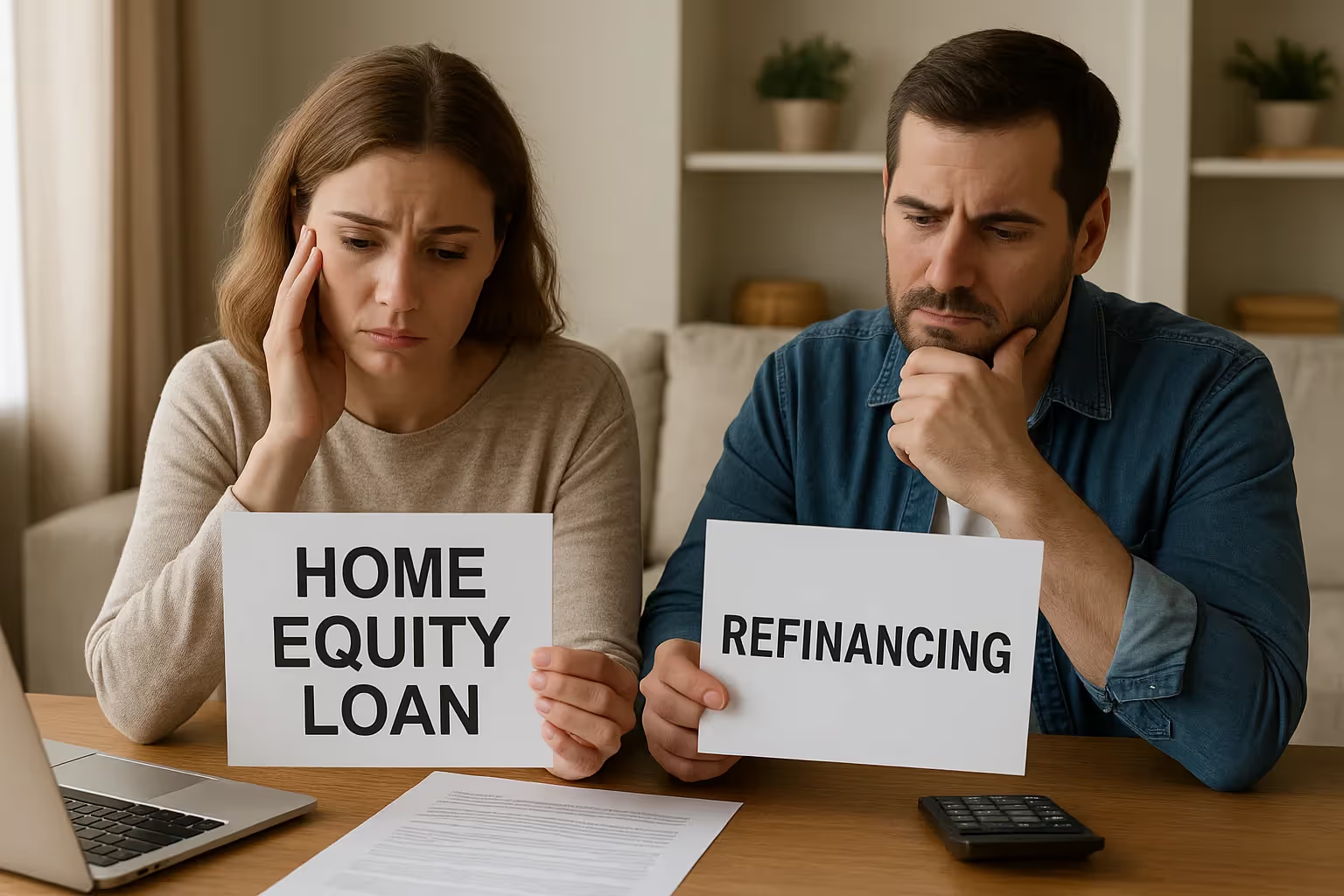
Before you even start looking at interest rates or talking to lenders, it's really important to figure out why you want to refinance. What does success look like for you? Are you trying to lower your monthly payments to free up some cash flow? Maybe you want to pay off your mortgage faster by shortening the loan term. Or perhaps you need to tap into your home's equity for a big expense, like a renovation, starting a business, or consolidating high-interest debt. Knowing your primary objective is the first and most important step.
Clarify Your Refinance Objectives
Think of refinancing like planning a trip. You wouldn't just start driving without knowing where you're going, right? Refinancing is similar. You need a destination in mind. What's the main reason you're considering this? Having a clear goal in mind will help you focus on the refinance offers that actually make sense for your situation.
Here are some common goals people have when refinancing:
- Lowering Monthly Payments: This is a big one for many homeowners. If interest rates have dropped since you got your original mortgage, you might be able to get a new loan with a lower rate and/or a longer repayment period, which reduces how much you pay each month.
- Paying Off the Mortgage Sooner: If you have the financial means, you might want to shorten your loan term. This means higher monthly payments, but you'll pay less interest over the life of the loan and own your home free and clear much faster.
- Accessing Home Equity: Your home's value might have increased, giving you more equity. Refinancing can allow you to borrow against that equity. This cash can be used for various purposes, from home improvements to paying for education or unexpected medical bills.
- Consolidating Debt: If you have other debts with high interest rates, like credit cards or personal loans, you might be able to refinance your mortgage to include that debt. This can simplify your payments and potentially lower the overall interest you pay.
Explore Different Refinance Motivations
It's easy to get sidetracked by shiny offers, but sticking to your main objective keeps you on track. For instance, if your primary goal is to lower your monthly payments, you'll want to focus on offers that achieve that, even if they extend your loan term slightly. Conversely, if paying off your home faster is the priority, you'll look for shorter terms, even if the monthly payment is a bit higher.
Understanding your motivations helps you filter through the noise and focus on what truly benefits your financial well-being. It's about making your mortgage work for your current life and future plans, not just chasing a lower number.
Aligning Refinance with Personal Financial Milestones
Your refinancing goals should fit into your bigger financial picture. If you're planning to retire in five years, taking out a new 30-year mortgage might not make sense, even if it lowers your monthly payment. You need to think about how this decision impacts your long-term financial health and your ability to reach other goals, like saving for retirement or your kids' college fund. Consider this: If you're thinking about using the cash from refinancing for a home renovation, make sure that renovation will actually add value to your home or significantly improve your quality of life. It needs to align with your overall financial plan.
Preparing for Better Mortgage Refinance Rates
Before you even start thinking about calling lenders or comparing offers, it's smart to get your financial house in order. This prep work can make a huge difference in the rates you're offered and how smoothly the whole process goes. Think of it like getting ready for a job interview – you want to look your best.
Audit Your Current Mortgage and Credit
First things first, pull out your latest mortgage statement. You need to know exactly what you're working with. Jot down your current interest rate, the remaining balance on the loan, and importantly, check for any prepayment penalties. These penalties can sometimes sneak up on you and eat into any savings you might be hoping for. It's also a good idea to get a copy of your credit report. You can usually get one for free each year from the major credit bureaus. Look it over carefully for any errors. Sometimes, a simple fix can boost your score, which directly impacts the rates you'll be offered.
Improve Your Credit Score for Better Terms
Your credit score is a big deal when it comes to getting approved for a refinance and, more importantly, the interest rate you'll get. Lenders see a higher score as a sign that you're a reliable borrower. Even a small bump in your score can translate into significant savings over the life of your new loan. If your score isn't where you'd like it to be, focus on a few key things:
- Pay down credit card balances: High credit utilization can drag your score down.
- Make all payments on time: Payment history is a huge factor.
- Avoid opening new credit accounts: This can temporarily lower your score.
- Check for and dispute errors: Make sure your report is accurate.
Getting your credit in shape before you apply can mean the difference between a mediocre rate and a really great one. It's worth the effort.
Knowing Your Home's Equity Position
Equity is the difference between what your home is worth and what you owe on your mortgage. Lenders look at your loan-to-value (LTV) ratio, which is basically your loan balance divided by your home's value. Generally, the more equity you have, the better your chances of getting approved and securing favorable terms. If you're planning a cash-out refinance, having substantial equity is obviously key. You can get an estimate of your home's current market value through online tools, but a professional appraisal will be needed during the refinance process itself. Knowing your approximate equity position helps you understand what refinance options might be available to you.
Strategies for Securing Better Mortgage Refinance Rates

So, you've decided to look into refinancing your mortgage. That's a big step, and it's smart to approach it with a clear plan. It's not just about chasing the lowest interest rate; it's about making your mortgage work better for you right now. This means getting a good handle on your current situation and then actively seeking out the best deals.
Shopping for Competitive Lender Offers
Don't just go with the first lender you talk to. Seriously, shop around. Different lenders have different rates and fees, and a little effort here can save you a lot of money over time. Get quotes from at least three to five different lenders, including banks, credit unions, and online mortgage companies. This way, you can really see who's offering the best deal for your specific situation. Remember, more choices mean more opportunities to save.
Comparing the Annual Percentage Rate (APR)
When you're comparing loan offers, don't just look at the interest rate. You need to look at the Annual Percentage Rate, or APR. The APR includes the interest rate plus most of the fees and other costs associated with the loan, spread out over the life of the loan. It gives you a more accurate picture of the total cost of borrowing. A lower APR generally means a cheaper loan.
Here's a quick breakdown of what to look for:
- Interest Rate: The base cost of borrowing money.
- APR: The interest rate plus fees, giving a broader cost view.
- Loan Term: How long you'll be paying back the loan (e.g., 15 or 30 years).
- Closing Costs: Fees charged to finalize the loan.
Always ask for a Loan Estimate from each lender. This standardized document makes it easier to compare offers side-by-side, showing you the interest rate, monthly payment, and closing costs clearly.
Leveraging Equity for Financial Goals
Refinancing isn't just about getting a lower rate on your existing loan. You can also use it to tap into the equity you've built up in your home. This is often called a cash-out refinance. If your home's value has increased or you've paid down a significant portion of your mortgage, you might have a good amount of equity. You can then borrow more than you currently owe, and the extra cash can be used for things like home improvements, paying off high-interest debt, or covering other major expenses. Just be mindful that taking out more money means a larger loan and potentially higher monthly payments, so make sure it aligns with your financial plan. As interest rates potentially decrease in late 2025, it's wise to shift from speculation to strategy. For those buying or renewing mortgages this fall, opting for flexibility is key. Consider shorter-term fixed mortgages (1-3 years) or adjustable-rate products to better adapt to changing market conditions [09d8].
Maximizing Savings Through Refinancing
So, you're thinking about refinancing your mortgage. That's smart. It's not just about getting a lower monthly payment, though that's a big perk. It's about making your money work harder for you. Let's break down how to really get the most out of this.
Calculating Potential Interest Savings
This is where the real magic happens. You've probably got a good idea of your current mortgage details – the balance, the interest rate, and how much time is left. Now, imagine swapping that for a new loan with a lower rate. The difference might seem small month-to-month, but over the years, it adds up. Think about it: if you shave off even a quarter of a percent from your rate on a big loan, you could be saving thousands. It's worth doing the math to see exactly how much you stand to gain. A simple way to get a ballpark figure is to use an online mortgage calculator, but for precise numbers, talking to a loan officer is best.
Recouping Closing Costs Through Savings
Refinancing isn't free. There are closing costs, appraisal fees, and other expenses involved. The key is to figure out how long it will take for your monthly savings to cover these upfront costs. This is often called the "break-even point." Let's say your closing costs are $5,000, and your new loan saves you $200 per month. Your break-even point would be 25 months ($5,000 / $200 per month). If you plan to sell your home or pay it off before then, refinancing might not be worth it. Most experts suggest refinancing only if you plan to stay in your home for at least two to three years after closing to truly benefit from the savings.
It's easy to get excited about potential savings, but it's important to be realistic. Refinancing isn't free. There are closing costs, appraisal fees, and potentially prepayment penalties on your current loan. You need to calculate how long it will take for your monthly savings to offset these upfront costs.
Evaluating the Impact of Interest Rate Fluctuations
Interest rates don't just go up or down; they can be a bit unpredictable. If you're thinking about refinancing, it's wise to understand how rate changes could affect your plans. If you see rates dipping, you might want to act quickly. However, lenders often offer rate locks, which can protect you if rates go up slightly before your refinance closes. It’s a good idea to compare offers and understand the terms of any rate lock you're offered. When you find a rate you like, the next step is locking it in. This means agreeing with the lender on a specific interest rate for a set period, usually 30 to 60 days, while your loan application is processed. This protects you if rates go up between when you apply and when you close. You can explore different refinancing strategies for 2025 to see what fits your situation best. Remember, a strong credit score can help you secure the lowest mortgage rates [c26f].
Here's a quick look at what to consider:
- Market Rates: Are current rates significantly lower than yours?
- Your Credit Score: Has your credit improved since you got your current mortgage?
- Home Equity: Have you built up a good amount of equity in your home?
- Personal Needs: Do you need cash for a specific purpose?
Refinancing involves costs, like appraisal fees and legal expenses. It's smart to calculate your break-even point – the time it takes for your savings to cover these upfront costs. If you plan to move or sell before reaching that point, refinancing might not be the best financial move right now.
Navigating the Refinance Process
So, you've decided refinancing is the way to go. That's awesome! But now comes the actual doing part. It can feel a bit like assembling flat-pack furniture without the instructions, a little daunting, but totally doable if you know what to expect. The main thing here is getting organized. Seriously, having your paperwork and ducks in a row makes everything go so much smoother. It means less stress for you and a better shot at getting the deal you want.
When to Lock In Your Refinance Rate
Deciding when to lock in your interest rate is a biggie. You're essentially telling the lender, "This is the rate I want, and I want it for my loan." It's like grabbing a good price before it disappears. Generally, you'll want to lock in when you feel the rates are good for you and unlikely to go much lower. Lenders usually offer a rate lock period, often 30 to 60 days, during which your rate is guaranteed. If rates drop significantly after you lock, you might miss out on those lower rates unless your lender has a "best rate guarantee" or "float-down" option, which isn't always standard.
The decision to lock your rate involves a bit of a gamble. You're betting that the rate you secure today is the best you'll get. If rates fall, you might regret not waiting. If they rise, you'll be glad you locked.
Avoiding Common Refinancing Pitfalls
It's easy to get caught up in the excitement of a new loan, but there are a few common traps people fall into. One big one is focusing only on the advertised interest rate and forgetting about all the other costs. These fees can really add up and eat into your savings.
Here are some things to watch out for:
- Hidden Fees: Always ask for a full breakdown of all closing costs. Don't assume the initial estimate is the final number.
- Ignoring the Loan Term: A lower monthly payment might sound great, but if it means extending your loan term by several years, you could end up paying more interest overall.
- Not Comparing Offers: It's tempting to go with the first lender who gives you a quote, but shopping around can save you a lot of money. Get Loan Estimates from at least three different lenders.
- Forgetting About Prepayment Penalties: Make sure your current mortgage doesn't have a penalty for paying it off early, and check if the new loan has any.
Understanding the Costs Involved
Refinancing isn't free. There are costs associated with getting a new mortgage, just like when you bought your home. These are called closing costs, and they can include a variety of fees. It's important to know what you're paying for so there are no surprises.
Here's a look at some typical costs:
- Appraisal Fee: This pays for a professional to assess your home's current market value. Lenders need this to determine your loan-to-value ratio.
- Origination Fee: Some lenders charge this fee for processing your loan application.
- Title Insurance: This protects the lender (and sometimes you) against any claims on the property's title.
- Recording Fees: These are charged by your local government to record the new mortgage documents.
- Attorney Fees: In some states, an attorney is required to handle the closing process.
It's a good idea to get a detailed list of all these potential costs from your lender early on. You can often negotiate some of these fees, or see if the lender offers a "lender-paid" option where they cover some costs in exchange for a slightly higher interest rate.
Wrapping It Up
So, thinking about refinancing your mortgage in 2025? It's definitely a move that could save you some money or help you reach other financial goals. We've gone over why it's a good idea, how to check if it's right for you, and what steps to take to get the best deal. Remember to compare offers from different lenders, keep an eye on all the costs involved, and make sure the savings you expect will actually outweigh those expenses. It might take a little homework, but getting your mortgage to work better for you is totally worth the effort.
Frequently Asked Questions
What exactly is mortgage refinancing?
Refinancing your mortgage means you're getting a new home loan to pay off your old one. It's like swapping out your current loan for a fresh start, possibly with a different interest rate or a different amount of time to pay it back. It's a way to make your mortgage work better for you right now.
Why would someone want to refinance their mortgage?
People refinance for many reasons! Some want to lower their monthly payments to save money. Others want to pay off their loan faster or get cash out of their home's value for things like home improvements or other big expenses. Sometimes, it's just to get a better interest rate if market rates have dropped since they got their original loan.
How can I get a better interest rate when I refinance?
To get a better rate, focus on improving your credit score by paying bills on time and lowering credit card balances. Also, shop around and compare offers from multiple lenders, looking at the Annual Percentage Rate (APR) which includes fees, not just the interest rate itself.
Are there costs involved in refinancing?
Yes, refinancing isn't free. You'll likely have to pay closing costs, appraisal fees, and other charges. It's important to figure out how long it will take for your monthly savings to cover these costs. This is called the 'break-even point'.
When is the best time to lock in my refinance rate?
You should lock in your rate once you've found an offer you're happy with and have chosen a lender. This 'rate lock' protects you from having the interest rate go up while your loan is being processed. Make sure the lock period is long enough for your closing.
What's the difference between an interest rate and an APR?
The interest rate is just the percentage you pay on the loan amount. The APR, or Annual Percentage Rate, is a broader look at the cost of borrowing. It includes the interest rate plus other fees and charges associated with the loan, giving you a more complete picture of the total cost.












Get in touch with a loan officer
Our dedicated loan officers are here to guide you through every step of the home buying process, ensuring you find the perfect mortgage solution tailored to your needs.
Options
Exercising Options
Selling
Quarterly estimates
Loans
New home

Stay always updated on insightful articles and guides.
Every Monday, you'll get an article or a guide that will help you be more present, focused and productive in your work and personal life.








.png)
.png)
.png)
.avif)
.avif)
.avif)
.png)
.png)
.png)
.avif)
.png)
.png)
.avif)
.png)
.avif)
.png)
.avif)
.avif)