


Unlock Savings: Explore Current VA Refinance Mortgage Rates Today
December 1, 2025
Explore current VA refinance mortgage rates. Discover savings opportunities and navigate options to secure the best rates for your VA loan today.

Thinking about refinancing your VA loan? It could be a smart move if you can snag a better interest rate than you have now. But honestly, finding the best deal takes a bit of effort. You'll want to get a handle on what influences those rates, what lenders look for, and how to actually get yourself a good offer. Let's look into how you can find the best current VA refinance mortgage rates today.
Key Takeaways
- VA mortgage rates change daily with the economy, so it's wise to check offers from different lenders regularly.
- Your personal finances, like your credit score and existing debt, significantly impact the rate you'll be offered.
- Comparing offers from at least three VA-approved lenders helps ensure you get a competitive rate.
- Private lenders, not the VA, set the rates based on market conditions and perceived risk.
- Paying for discount points upfront can lower your interest rate, but weigh if the initial cost is worth the long-term savings.
Understanding Current VA Refinance Mortgage Rates

Factors Influencing Your Refinance Rate
When you're looking into refinancing your VA loan, the interest rate you're offered isn't just pulled out of thin air. A few things really shape that number. Think of it like this: lenders are looking at a couple of big buckets of information. One bucket is all about the general economic picture – what's happening with inflation, how the economy is doing overall, and what the Federal Reserve is up to. These big-picture items set the stage for what rates are generally available. The other bucket is all about you. Your personal financial health plays a huge role. This includes things like your credit score, how much debt you already have, and your income. Lenders use this information to figure out how risky it might be to lend you money. The VA itself doesn't set these rates; private lenders do, and they base their offers on their own costs and the perceived risk.
Market Conditions Affecting VA Rates
So, what's going on in the wider economy can really move the needle on VA refinance rates. If things are generally stable and inflation isn't a big worry, you'll often see lower rates. But if the economy is shaky or prices are going up fast, rates tend to climb. It’s a bit like the weather – sometimes it’s calm, and sometimes it’s stormy, and that affects everything, including mortgage rates.
The Role of Private Lenders in Setting Rates
It's a common misconception that the VA dictates the exact interest rates for refinances. In reality, the Department of Veterans Affairs guarantees a portion of the loan, which reduces risk for lenders. However, the actual rates offered are set by private banks, credit unions, and mortgage companies. These lenders consider various factors, including their own operating costs, the current economic climate, and the risk associated with each borrower's financial profile. They are the ones who decide what rate to offer you, aiming to remain competitive while managing their own business needs.
When you're shopping for a VA refinance, remember that the advertised rates are just a starting point. Your individual rate will depend on a mix of broad economic trends and your specific financial situation. It's always a good idea to get quotes from several lenders to see who offers you the best deal.
Exploring Today's VA Refinance Opportunities
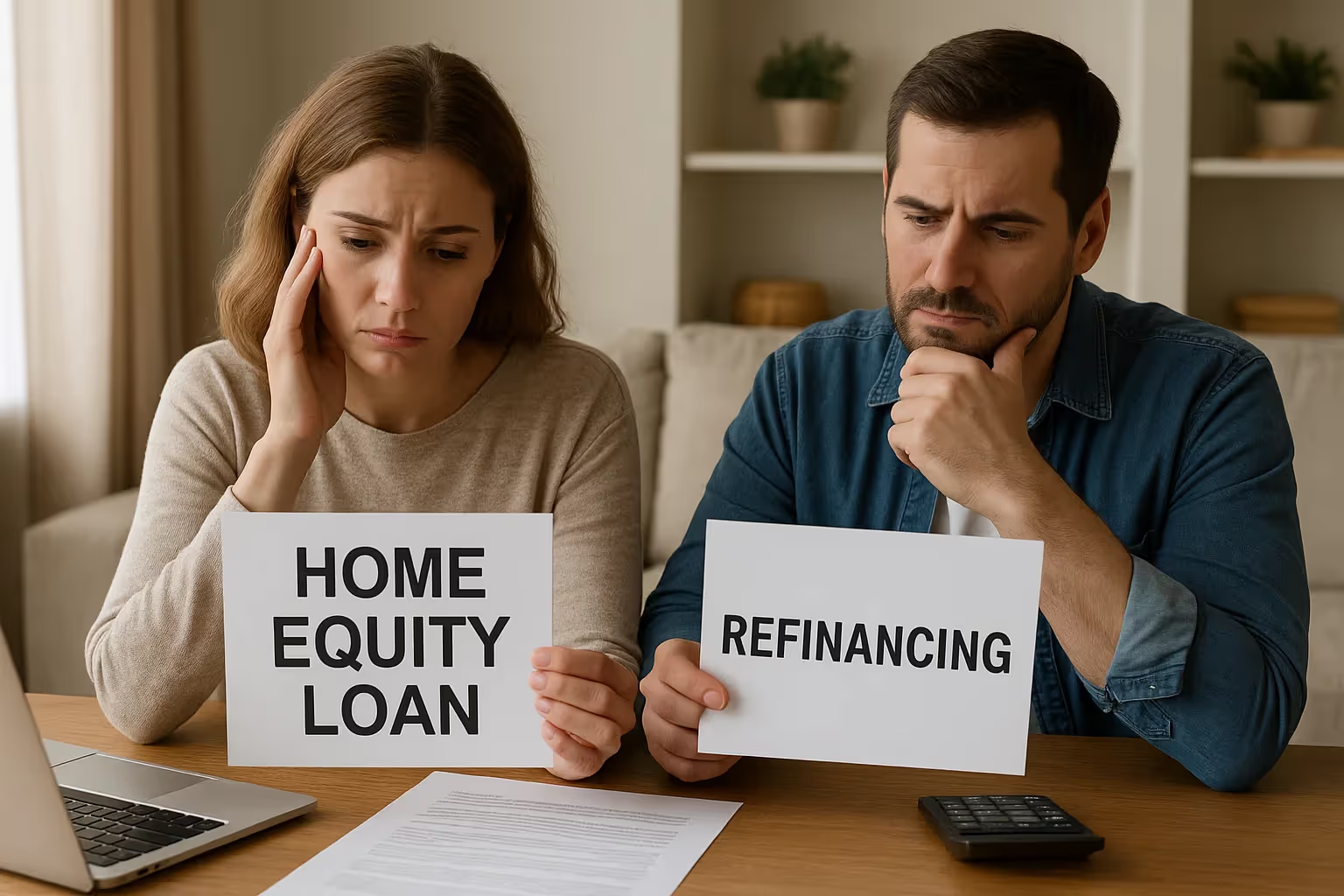
Refinancing your VA loan can be a smart move, especially if you're looking to trim down your monthly payments or tap into your home's equity. It's not just about getting a lower interest rate, though that's a big part of it. There are several ways refinancing can help you financially.
Benefits of Refinancing Your VA Loan
Refinancing a VA loan comes with some pretty good perks. For starters, you can often snag a lower interest rate than what you're currently paying. This can mean serious savings over the years. Plus, unlike some other loans, VA loans don't require private mortgage insurance (PMI), even when you refinance. This alone can cut down your monthly bill quite a bit. Another plus is that VA Streamline refinances usually have fewer fees and closing costs. The VA Funding Fee, which is a one-time charge, is also lower for streamlines and can often be rolled into the loan itself. Some folks might even get out of paying it altogether. And if your credit isn't perfect, VA refinancing tends to be more forgiving than other loan types. You also don't have to worry about penalties if you decide to pay off your loan early.
When to Consider a VA Refinance
So, when is the right time to think about refinancing? A good rule of thumb is when current interest rates are significantly lower than your existing rate. Even a small drop can add up to big savings over time. It's also worth looking into if you need to access cash for home improvements, debt consolidation, or other major expenses. The VA Cash-Out refinance option lets you borrow against your home's equity. Keep an eye on market trends; rates can change daily. The average 30-year VA refinance Annual Percentage Rate (APR) is currently around 7.70%, but this can fluctuate. Being aware of these trends helps you jump on an opportunity when it appears.
Identifying Savings Through Refinancing
Figuring out how much you can save is key. The most direct way is by lowering your interest rate. For example, if you have a $200,000 loan at 6% and refinance to 5%, you could save a good chunk of change each month. Another way to save is by shortening your loan term. While your monthly payment might go up slightly, you'll pay less interest overall and own your home free and clear sooner. You can also use a VA Cash-Out refinance to pay off higher-interest debts, like credit cards or personal loans. Consolidating that debt into your mortgage could lead to lower monthly payments and less interest paid in the long run. It's all about looking at your current financial picture and seeing where refinancing can make the biggest positive impact.
Refinancing isn't a one-size-fits-all solution. It requires careful consideration of your personal financial situation, current market conditions, and your long-term goals. Taking the time to compare offers and understand the terms can lead to significant financial benefits.
Navigating VA Refinance Rate Options
When you're thinking about refinancing your VA loan, it's not just a one-size-fits-all deal. There are a couple of main ways to go about it, and each one has its own purpose and potential benefits. Figuring out which option fits your financial situation best right now is pretty important.
Comparing VA Streamline vs. Cash-Out Refinance Rates
So, you've got a VA loan and you're looking to refinance. Two big programs are usually on the table: the VA Streamline Refinance, also known as the Interest Rate Reduction Refinance Loan (IRRRL), and the VA Cash-Out Refinance. They serve different needs, and naturally, they come with different rate structures.
- VA Streamline (IRRRL): This one's all about making your current VA loan cheaper. It's designed for folks who already have a VA loan and want to get a lower interest rate or a smaller monthly payment. The "streamline" part means it's usually a simpler process with less paperwork, often skipping the need for a new appraisal or a deep dive into your income. The main goal here is just to reduce your rate.
- VA Cash-Out Refinance: If you've built up some equity in your home, this option lets you tap into it. You can borrow more than you owe on your current VA loan and get the difference in cash. People use this for all sorts of things – paying off high-interest debt, fixing up the house, or handling unexpected bills. While you're taking on a bigger loan balance, you still get to keep those good VA loan terms. Rates on these might be a little higher than a streamline because you're borrowing more, but they can still be quite competitive compared to other loan types.
Generally speaking, the VA Streamline (IRRRL) tends to have the lowest rates. This is because it's a less risky transaction for the lender – you're not borrowing extra money, just lowering the rate on what you already owe. A VA Cash-Out Refinance, since it involves borrowing more money, might have slightly higher rates. It's a good idea to compare quotes for both if you're not sure which route makes more sense for you.
Understanding Discount Points and APR
When you're looking at loan offers, you'll see a couple of terms that can really affect the total cost: discount points and the Annual Percentage Rate (APR). Understanding these can help you see the full picture beyond just the advertised interest rate.
- Discount Points: These are fees you can pay upfront to the lender when you close on the loan. Each point typically costs about 1% of the loan amount. The idea is that by paying this fee, you get a lower interest rate for the entire life of the loan. It can be a good move if you plan to stay in your home for a long time, as the savings on interest over the years can outweigh the upfront cost. You've got to do the math to see if it works for your situation.
- Annual Percentage Rate (APR): The APR is a broader measure of the cost of borrowing. It includes not just the interest rate but also other fees and costs associated with the loan, like points, mortgage insurance (though not typically on VA loans), and certain closing costs. The APR gives you a more accurate comparison of the total cost of different loans than the interest rate alone. When comparing loan offers, always look at the APR to get a clearer idea of which loan is truly cheaper.
The Impact of Loan Term on Your Rate
The length of your loan, or the loan term, also plays a role in the interest rate you'll be offered. Lenders often price loans differently based on how long they'll be outstanding.
- Shorter Terms (e.g., 15-year): These usually come with lower interest rates. The lender gets their money back faster, which reduces their risk. However, the trade-off is that your monthly payments will be higher because you're paying off the same amount of money in less time.
- Longer Terms (e.g., 30-year): These typically have slightly higher interest rates. While your monthly payments will be lower and more manageable, you'll end up paying more interest over the full life of the loan.
Choosing the right loan term is a balancing act between your monthly budget and the total interest you'll pay over time. It's worth thinking about how long you plan to stay in the home and what kind of monthly payment fits comfortably into your budget.
Securing the Best Current VA Refinance Mortgage Rates
So, you're looking to refinance your VA loan and want to make sure you're getting the best possible rate. It's not just about picking the first lender you talk to, you know? It takes a little effort, but the payoff can be pretty significant over the life of the loan. Think of it like shopping for anything else important – you compare, you ask questions, and you make sure you're getting a good deal.
How Your Credit Score Affects Your Rate
Your credit score is a big deal when it comes to getting a good refinance rate. Lenders use it to figure out how risky it might be to lend you money. A higher score generally means you're seen as a safer bet, and that usually translates to a better interest rate. While the VA doesn't set a minimum score, most lenders do. A score of 620 or higher is often the starting point, but the better your score, the more options you'll likely have.
Here's a general idea of how credit scores can influence rates:
- Excellent (740+): You're likely to get the best rates available, often with fewer lender fees.
- Good (670-739): You should still qualify for competitive rates, though maybe not the absolute lowest.
- Fair (580-669): You might still get approved, but expect higher interest rates and potentially more lender scrutiny.
- Poor (Below 580): Getting approved for a refinance can be challenging, and rates will likely be quite high if you do get an offer.
Remember, these are just general guidelines. The VA doesn't have a minimum credit score, but lenders usually do, often setting it around 620 or higher. Always check with individual lenders for their specific requirements.
The Importance of Shopping Multiple Lenders
Seriously, don't just go with the first place that offers you a rate. Lenders all have different pricing structures, and what one offers might be quite a bit different from another. You should aim to talk to at least three to five different lenders. It sounds like a lot, but it's worth it. Make sure you ask for a Loan Estimate from each one, and try to get them all on the same day if you can. This way, you're comparing apples to apples.
When you get those Loan Estimates, look beyond just the interest rate. Check out the Annual Percentage Rate (APR), which includes fees. Also, see if there are any lender credits or discount points involved. Sometimes a slightly higher rate with a lender credit can be a better deal than a lower rate with a bunch of upfront costs.
Negotiating Your VA Mortgage Rate Effectively
Once you've gathered offers from a few lenders, you're in a better position to negotiate. Don't be afraid to let lenders know about better offers you've received from competitors. You can ask if they can match or beat that rate. Sometimes, they have a little wiggle room, especially if they really want your business. You can also discuss lender fees and see if any of those can be reduced or rolled into the loan. Being prepared with solid credit and a clear understanding of your financial situation gives you more power at the negotiation table.
Key Considerations for VA Loan Refinancing

Refinancing your VA loan isn't just about getting a new interest rate; it's about making sure it fits your life and financial goals. There are a few important things to keep in mind before you jump in.
VA Loan Benefits Compared to Conventional Loans
VA loans come with some pretty sweet perks that conventional loans just don't offer. For starters, you won't have to worry about private mortgage insurance (PMI), even if you refinance with a high loan-to-value ratio. This alone can save you a good chunk of change every month. Also, VA loans typically have more flexible credit requirements, making them accessible to more veterans. Plus, there are no prepayment penalties, so you can pay off your loan early if you want to without getting hit with extra fees.
Understanding Loan Limits and Entitlement
While VA loans are known for allowing no down payment, there are still limits to consider. These limits are based on your county's median home price and your available entitlement. Your entitlement is basically the amount the VA guarantees to the lender. If you've used your entitlement before, you might have less available for a new loan, which could affect how much you can borrow or require a down payment. It's smart to check your Certificate of Eligibility (COE) to see your current entitlement status.
Making Informed Decisions for Your Financial Future
Refinancing can be a great way to save money or access cash, but it's not a decision to take lightly. You need to look at the whole picture.
- Calculate the Break-Even Point: Figure out how long it will take for the savings from your new loan to cover the costs of refinancing. If you plan to move before you reach that point, it might not be worth it.
- Assess Your Long-Term Goals: Are you planning to stay in the home for many years? Do you need cash for a specific purpose? Your answers will help determine if a refinance makes sense.
- Compare All Costs: Don't just look at the interest rate. Consider all the fees involved, like appraisal fees, title insurance, and any points you might pay. These can add up.
Refinancing your VA loan can be a smart move, but it requires careful thought. Make sure you understand all the costs and benefits involved, and how they align with your personal financial situation and future plans. It's about making the best choice for your unique circumstances.
So, What's the Takeaway?
Alright, so we've talked about VA refinance rates and what goes into them. Just remember, those numbers change pretty much daily, and what you actually get depends a lot on your own finances. Don't just settle for the first offer you see. It really pays to shop around with a few different lenders to find a deal that works for you. It might take a little digging, but getting a better rate could save you a good amount of money over time. Keep an eye on things, know your numbers, and you'll be in a good spot to make a smart move for your home loan.
Frequently Asked Questions
Are VA loan rates usually lower than regular home loan rates?
Most of the time, yes! Because the VA guarantees part of the loan, lenders take on less risk. This often means they can offer VA loan rates that are lower than those for regular loans, especially if you have a good credit score and a steady job.
What's considered a good VA mortgage rate right now?
A 'good' rate changes every day and depends on your personal situation. It's smart to look up the national average for VA loans and then compare offers from at least three different lenders. This helps you see if you're getting a fair deal.
Does my credit score affect my VA loan rate?
Yes, it does. While the VA doesn't have a strict minimum score, lenders do. A higher credit score usually means you'll get a better interest rate. Paying off bills and avoiding new debt can help improve your score.
Are there limits on how much I can borrow with a VA loan?
If you have full entitlement, there's often no set limit. However, if you only have some entitlement left, limits might apply based on where you live. Lenders also look at your income and debts to make sure you can afford the loan.
Will VA loan rates go down in the future?
It's hard to say for sure. Rates depend on many things, like the economy. It's best to check current rates and compare offers when you're ready to refinance, rather than waiting for a specific rate drop.
What's the difference between a VA Streamline and a VA Cash-Out refinance?
A VA Streamline (IRRRL) is mainly for lowering your current rate with less paperwork. A VA Cash-Out refinance lets you borrow more than you owe and get the extra money in cash, which can be used for things like home repairs or paying off debt. Cash-out rates might be a little higher.












Get in touch with a loan officer
Our dedicated loan officers are here to guide you through every step of the home buying process, ensuring you find the perfect mortgage solution tailored to your needs.
Options
Exercising Options
Selling
Quarterly estimates
Loans
New home

Stay always updated on insightful articles and guides.
Every Monday, you'll get an article or a guide that will help you be more present, focused and productive in your work and personal life.








.png)
.png)
.png)
.avif)
.avif)
.avif)
.png)
.png)
.png)
.avif)
.png)
.png)
.avif)
.png)
.avif)
.png)
.avif)
.avif)