


Unlock Savings: Today's 15 Year Fixed Mortgage Refinance Rates Explained
December 8, 2025
Explore today's 15 year fixed mortgage refinance rates. Compare trends, pros, cons, and expert predictions to save money on your home loan.

Thinking about refinancing your mortgage? It's a big decision, and understanding the options is key. Today, we're going to talk about 15 year fixed mortgage refinance rates. This type of loan can be a great way to save money over time, but it's not for everyone. We'll break down what you need to know, from current trends to why comparing rates is so important. Let's get started on figuring out if a 15-year refinance is the right move for your financial future.
Key Takeaways
- The national average 15-year fixed refinance rate is currently around 6.06%, slightly up from last week. Comparing rates from different lenders is important to find the best deal.
- Refinancing to a 15-year loan often comes with lower interest rates and means you'll pay less total interest over the life of the loan compared to a 30-year term.
- A 15-year refinance helps you build equity in your home faster due to higher principal payments each month.
- While a 15-year loan offers faster payoff and less interest, it also means higher monthly payments than a 30-year loan.
- Consider a 15-year refinance if your income has increased, if the monthly payments won't be much higher than your current ones, or if you're looking to pay off your home sooner.
Today's National 15-Year Fixed Refinance Rate Trends
As of Monday, December 8, 2025, the national average interest rate for a 15-year fixed refinance is hovering around 6.06%. This is a slight tick up from last week's average of 6.03%. For comparison, the average rate on a 15-year fixed mortgage for purchasing a home is currently at 5.62%, also a bit higher than last week's 5.60%.
These small shifts show that while rates aren't dramatically changing day-to-day, they are trending slightly upward. It's always a good idea to keep an eye on these numbers if you're thinking about refinancing.
Here's a quick look at how refinance rates are shaping up:
- 15-Year Fixed Refinance: 6.06% (up from 6.03% last week)
- 30-Year Fixed Refinance: 6.66% (this is a general benchmark, specific averages vary)
- 10-Year Fixed Refinance: 6.25% (this is a general benchmark, specific averages vary)
Keep in mind that these are national averages. Your actual rate could be different based on your credit score, loan amount, and the lender you choose. It really pays to shop around.
When you're looking to refinance, comparing offers from different lenders is super important. Even a small difference in the interest rate can add up to significant savings over the life of a 15-year loan. It's not just about the rate, though; also check out the Annual Percentage Rate (APR), which gives you a better picture of the total cost of the loan, including fees.
Why Compare 15-Year Refinance Rates Today?

Even though mortgage rates might seem higher than they were a few years back, the rates for a 15-year fixed refinance are usually a better deal than what you'd find on a 30-year loan. It's always a smart move to shop around. Think of it like looking for the best price on a new TV – you wouldn't just buy the first one you see, right? The same applies to your mortgage. Comparing offers from different lenders can really make a difference in how much you pay over the life of the loan.
When you're comparing, don't just look at the interest rate itself. Make sure you're also checking the Annual Percentage Rate (APR), which gives you a more complete picture by including some of the fees associated with the loan. Some lenders might have lower closing costs, or maybe your current bank has a special deal for you. It pays to see what's out there.
Here's why checking rates now makes sense:
- Potential for Lower Rates: Generally, 15-year fixed rates are lower than 30-year fixed rates because the lender is taking on less risk over a shorter period.
- Save on Total Interest: A shorter loan term means you'll pay less interest overall, even if the monthly payment is a bit higher.
- Build Equity Faster: More of your payment goes towards the principal with a 15-year loan, helping you own your home outright sooner.
- Payment Stability: A fixed-rate loan means your principal and interest payments stay the same, making budgeting easier.
Refinancing to a 15-year loan often makes the most sense when current rates are noticeably lower than your existing mortgage rate. If you can manage a slightly higher monthly payment without straining your budget, it could lead to significant savings over time. However, if the payment jump is too much, you might consider making extra payments on your current 30-year loan instead, which gives you more flexibility if your financial situation changes.
Pros and Cons of a 15-Year Mortgage Refinance
Thinking about switching your mortgage to a 15-year fixed rate? It's a big decision, and like most big decisions, there are good things and not-so-good things to consider. Let's break it down.
The Upside: Why a 15-Year Refi Might Be Your Jam
- You'll pay less interest overall. This is the big one. Because you're paying off your loan faster and often at a lower rate, the total amount of interest you shell out over the life of the loan shrinks considerably. It's a smart move if you want to save money in the long run.
- Build equity faster. With a 15-year loan, a larger chunk of your monthly payment goes straight to the principal balance from the get-go. This means you own more of your home sooner, which can be great if you plan to sell or want to tap into your home's value later.
- Predictable payments. A fixed-rate mortgage means your principal and interest payment stays the same for the entire 15 years. This makes budgeting a lot easier, though remember that property taxes and homeowners insurance can still change.
The Downside: What to Watch Out For
- Higher monthly payments. This is the most significant drawback. Because you're cramming 15 years of payments into 15 years (instead of 30), your monthly bill will be noticeably higher. You need to be sure your budget can handle it without causing too much strain.
- Less financial flexibility. Those higher payments can eat into your budget, leaving less room for other financial goals. Think about saving for retirement, college funds, or even just having a cushion for unexpected expenses. If your income is tight, this could be a problem.
- May not qualify for as much. If you're looking to buy a more expensive home or refinance a larger amount, the higher monthly payment required for a 15-year loan might put it out of reach. Lenders look at your debt-to-income ratio, and a bigger monthly payment means you might qualify for less.
Sometimes, the best way to get the benefits of a 15-year loan without the commitment is to simply make extra payments on your current 30-year mortgage. You can pay less interest and pay off your home faster, but you keep the flexibility of a lower minimum payment if things get tight. Just be sure to tell your lender to apply the extra payments directly to your principal.
If you're curious about how much you could save, comparing current refinance rates is a good first step.
When to Consider a 15-Year Refinance

So, you're thinking about switching your mortgage to a 15-year fixed loan? That's a big decision, and it makes sense to figure out if it's the right move for you right now. Generally, a 15-year refinance is a good idea if you've got a bit more room in your monthly budget and want to pay off your home faster. It's like giving your mortgage a speed boost.
Here are a few situations where it might be a smart play:
- Your income has gone up since you got your current mortgage. Maybe you got a promotion, or your side hustle is really taking off. If you can comfortably handle a higher monthly payment, refinancing to a 15-year loan means you'll be mortgage-free much sooner. Think about it: if you took out a 30-year loan five years ago and your salary has jumped significantly, you could potentially cut your remaining loan term in half.
- The monthly payment difference isn't too scary. Sometimes, even with a shorter term, the new payment isn't drastically higher than what you're paying now. This can happen if your credit score has improved a lot since you first got your loan, or if you're moving away from something like an FHA loan with its mortgage insurance premiums. You might find the jump in payment is manageable, especially when you consider the long-term savings.
- You're looking to save a lot on interest. This is a big one. Because you're paying off the loan faster and often getting a lower interest rate, the total amount of interest you pay over the life of the loan can be significantly less. It's a trade-off: higher monthly payments now for much lower overall costs later.
- You're already partway through a 30-year mortgage. If you've been paying on a 30-year loan for a while, say you're 10-15 years in, refinancing to a 15-year loan could be appealing. Your current rate might be higher than today's rates, and your remaining balance is lower. This combination can make the transition to a 15-year term more feasible and financially beneficial.
It's worth noting that if your main goal is just to get the absolute lowest monthly payment possible, a 15-year refinance probably isn't your best bet. You might be better off looking at a 20- or 30-year refinance, or even just making extra payments on your current loan if your budget allows.
Think about your current financial picture and your goals. If paying off your home quickly and saving on interest are high on your list, and you can handle the increased monthly cost, then a 15-year refinance could be a great option to explore.
How to Refinance Into a 15-Year Loan
So, you're thinking about switching your mortgage to a 15-year fixed loan. That's a big step, and it makes sense to know what's involved. It's not just about picking a new loan; it's about making sure it fits your financial life.
First off, you'll need to go through the whole mortgage application process again. This means gathering a bunch of documents. Lenders want to see proof of your income, like pay stubs and tax returns, to make sure you can handle the new, likely higher, monthly payments. They'll also check your credit report and score – a good score usually means better interest rates. You'll also need to have your property appraised to determine its current market value.
Here's a general rundown of the steps:
- Shop Around: Don't just go with the first lender you find. Compare rates and terms from several different mortgage companies. Even a small difference in interest rate can save you a lot of money over 15 years.
- Get Pre-Approved: Once you've narrowed down your choices, get pre-approved for a 15-year refinance. This gives you a clear idea of what loan amount you qualify for and at what rate.
- Submit Application: Complete the full loan application with your chosen lender. This is where you'll provide all the necessary documentation.
- Underwriting and Appraisal: The lender will review your application and order an appraisal of your home.
- Closing: If everything checks out, you'll sign the final paperwork and officially close on your new 15-year mortgage. Be prepared for closing costs, which can include things like appraisal fees, title insurance, and origination fees.
The key is to be prepared and understand your own financial situation. Can you comfortably afford the higher monthly payments that come with a 15-year loan? If the answer is yes, and you're looking to pay off your home faster and save on interest, then refinancing into a 15-year loan could be a smart move.
Remember, refinancing isn't just about getting a lower rate. It's about choosing a loan term that aligns with your long-term financial goals. A 15-year loan means higher monthly payments, but it also means you'll own your home free and clear much sooner and pay significantly less interest over the life of the loan.
15-Year Refinance Mortgage FAQs
So, you're thinking about refinancing your mortgage into a 15-year fixed loan? That's a big decision, and it's smart to have questions. Let's clear some things up.
What exactly is a 15-year fixed refinance? Basically, it's when you replace your current home loan with a new one that you'll pay off over 15 years, and the interest rate stays the same the whole time. People usually do this to save money, either by getting a lower interest rate, paying off the loan faster, or both. Just remember, the monthly payments on a 15-year loan are typically higher than on a 30-year loan.
Here are some common questions people have:
- What are the main benefits? You'll likely get a lower interest rate compared to a 30-year loan. This means you'll pay way less interest over the life of the loan. Plus, you build equity in your home much faster because more of your payment goes toward the principal right from the start. And, of course, you'll own your home free and clear in half the time.
- What are the downsides? The biggest one is the higher monthly payment. You need to make sure your budget can handle it. This also means you might have less money left over for other things like saving for retirement, unexpected expenses, or home repairs. It can also affect how much house you can afford if you're looking to buy.
- When does it make the most sense? It's a good idea if your income has gone up since you got your current mortgage, and you can comfortably afford the higher payments. It also makes sense if the interest rates you can get now are significantly lower than your current rate, and the new payment isn't a huge jump. Some people consider it if they're already halfway through a 30-year loan and want to speed things up.
- Can I just pay extra on my current loan instead? Yes, you absolutely can! Many lenders let you make extra payments on your 30-year mortgage. This can help you pay less interest and pay off the loan faster, just like refinancing to a 15-year loan, but without the closing costs. It also gives you more flexibility – if you hit a rough patch financially, you can just go back to making the regular payment without penalty. It's worth comparing the numbers using a mortgage calculator to see which option saves you more.
Refinancing to a 15-year loan is a trade-off. You gain long-term savings and faster ownership, but you sacrifice some monthly payment flexibility and potentially have less cash available for other financial goals. It's all about what fits your current financial picture and future plans.
Do I need good credit to refinance? Generally, yes. Lenders want to see a solid credit history and a good credit score to approve you for a refinance, especially for a shorter-term loan like a 15-year. The better your credit, the better your chances of getting approved and securing a lower interest rate.
Current Refinance Rates
Looking at today's refinance rates can feel like trying to catch a moving target. Rates shift daily, influenced by a bunch of economic factors. As of early December 2025, the national average for a 15-year fixed refinance is sitting around 6.05% to 6.15% APR. For comparison, the 30-year fixed refinance is a bit higher, generally around 6.65% to 6.73% APR.
It's easy to get caught up in just the advertised rate, but remember that the Annual Percentage Rate (APR) gives you a more complete picture because it includes fees and other costs. Sometimes, a slightly higher rate with lower closing costs can be a better deal, especially if you don't plan to stay in your home for the full loan term.
Here's a snapshot of what refinance rates look like right now:
- 15-Year Fixed Refinance: Around 6.05% - 6.15% APR
- 30-Year Fixed Refinance: Around 6.65% - 6.73% APR
- 10-Year Fixed Refinance: Typically near 6.25% - 6.36% APR
- 5/1 ARM Refinance: Currently about 6.03% APR
The actual rate you'll get depends heavily on your personal financial situation. This includes your credit score, your debt-to-income ratio, and how much equity you have in your home. Lenders also have their own pricing, which is why shopping around is so important. You might find better deals by comparing offers from different lenders. You can compare mortgage rates from various institutions to see what's available.
While it's tempting to wait for the absolute lowest rate, don't let that stop you from exploring options. If you can significantly lower your current rate, even by a full percentage point or more, it's likely worth considering a refinance. The savings can add up considerably over the life of the loan.
Remember, these averages are just a starting point. Your individual rate could be higher or lower. It's always a good idea to get personalized quotes to see what you qualify for.
Weekly National Mortgage Interest Rate Trends
This past week, we've seen a slight tick upward in the national average interest rate for a 15-year fixed refinance. As of Monday, December 8, 2025, the rate stands at 6.06%, a small jump from last week's 6.03%. It's a good reminder that even small changes can add up over the life of a loan, making it important to stay informed.
Here's a quick look at how things have shifted:
- 15-Year Fixed Refinance Rate: 6.06% (up from 6.03%)
- 15-Year Fixed Mortgage Rate (Purchase): 5.62% (up from 5.60%)
These numbers are based on surveys of major lenders across the country. Keep in mind that these are averages, and your actual rate could be different based on your credit score, loan amount, and other factors. Shopping around and comparing offers is still the best way to find a rate that works for you. You can often find rates below the national average when you compare mortgage rates.
While rates have seen a minor increase, they remain a key factor for homeowners considering a refinance. The current environment suggests that rates are likely to stay above 6% for the remainder of the year. A significant drop, potentially triggering another large-scale refinancing boom, might only occur after a major economic event.
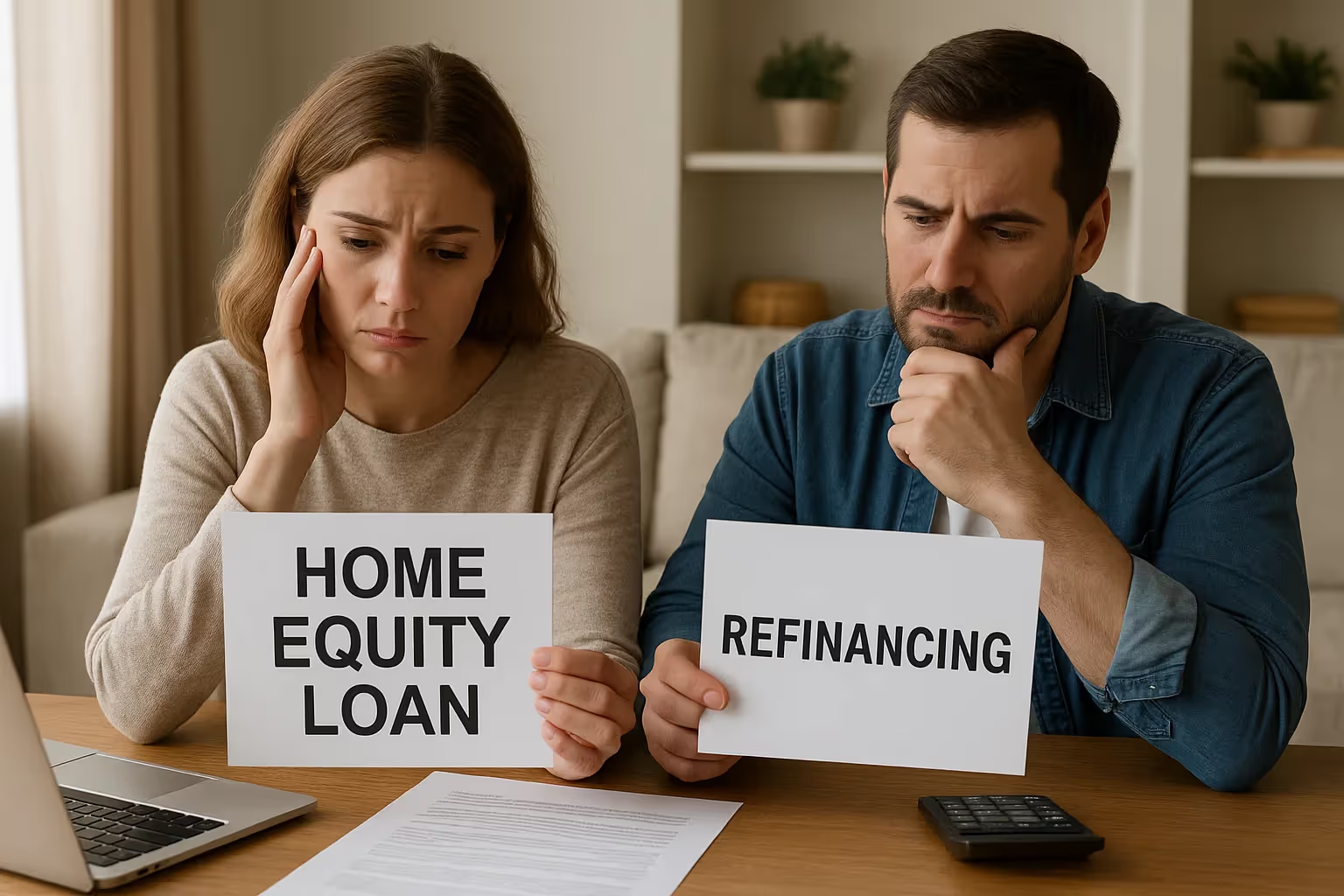
It's worth noting that many homeowners are still benefiting from rates locked in at much lower levels in previous years. Data shows a large percentage of existing mortgages are below the 5% threshold. This is why some homeowners are exploring other options like home equity loans instead of refinancing their primary mortgage. However, for those looking to shorten their loan term and build equity faster, a 15-year refinance could still be a smart move, even with these slight rate adjustments.
Bankrate's Mortgage Rate Collection Methods
So, how does Bankrate actually figure out what the mortgage rates are? It's not just a wild guess, that's for sure. They have a pretty structured way of gathering this information to give you a good picture of what's happening out there.
Basically, they collect a few different types of data:
- National Rate and APR Averages: These are the daily and weekly averages you see. Bankrate gets this info mainly from the five biggest banks and savings institutions across the country. Think of it as a broad snapshot.
- Bankrate Monitor (BRM) National Index Rate Averages: This is a longer-running survey that also pulls rates from banks and thrifts in many different areas of the U.S. It's reported weekly and gives a consistent look over time.
- "Top Offers": These are the rates you see advertised first by Bankrate's partners. They're averaged out daily and weekly based on the specific loan type and term you're looking at. This can give you an idea of what might be available if you shop around.
Comparing these different averages can really help you see where you might be able to save money. For instance, you can look at the national average and then see how the "top offers" stack up. It’s all about giving you the data to make a smarter choice when you're looking to refinance.
It's important to remember that these are averages and advertised rates. Your actual rate will depend on your personal financial situation, credit score, and the specific lender you choose. Shopping around is always the best way to find the best deal for you.
Expert Predictions for Mortgage Rates
Trying to guess where mortgage rates are headed is like trying to predict the weather next month – it's tricky business. A lot of things can make them move, like what's happening with inflation and any changes the Federal Reserve decides to make.
Most housing market watchers think rates will probably stick around above 6 percent for the rest of 2025. A big surge in people refinancing might only happen if the economy takes a nosedive or something else major shakes things up.
But here's the thing: you don't necessarily need to wait for the absolute perfect moment.
- If you can lower your current rate by a full percentage point or more, it's usually worth looking into.
- Even small drops can add up to noticeable savings over time.
- Keep an eye on economic news; it can give you clues about potential rate shifts.
Predicting exact mortgage rate movements is tough. Economic data and central bank actions play big roles. Experts generally see rates staying above 6% through 2025, with a major refinancing wave likely tied to significant economic events.
As of early December 2025, here's a snapshot of average refinance rates:
Wrapping It Up
So, looking at today's 15-year fixed refinance rates, which are sitting around 6.06% nationally, it's clear that refinancing can still be a smart move for some. While rates have nudged up a bit from last week, they're generally lower than what you'd find on a 30-year loan. This means you could potentially pay off your home faster and save on interest over time. But remember, it's not just about the headline rate. Always compare offers from different lenders, look at the full picture including fees, and figure out if a shorter loan term actually fits your budget and financial goals. It might be a great way to cut down your mortgage, but make sure it makes sense for you before you sign anything.
Frequently Asked Questions
What exactly is a 15-year fixed-rate refinance mortgage?
It's a way to swap your current home loan for a new one with a 15-year payoff plan. People often do this to save money, either by getting a lower interest rate, paying off the loan much faster, or both. Just remember, while you can save a lot over time, the monthly payments on a 15-year loan are usually higher than on a 30-year loan.
Are 15-year refinance rates usually lower than 30-year rates?
Yes, generally. Lenders often give shorter loans, like 15-year ones, lower interest rates because they're taking on less risk over a shorter period. This means you could save a good amount of money on interest over the life of the loan.
What are the biggest advantages of refinancing to a 15-year loan?
You'll pay less interest overall because of the lower rate and shorter term. You'll also build up your home equity much quicker since more of your payment goes towards the actual loan amount instead of just interest. Plus, you'll own your home free and clear in just 15 years!
What are the downsides of a 15-year refinance?
The main drawback is that your monthly payments will be higher than they would be with a 30-year loan. This is because you're paying off the same amount of money in half the time. You need to be sure your budget can handle the increased payment.
When is a good time to consider refinancing into a 15-year mortgage?
It's a smart move if you can afford the higher monthly payments and want to pay off your home faster and save on interest. It's especially good if you've gotten a raise since you took out your original loan, or if your credit score has improved, potentially giving you access to better rates.
How do I find out what current 15-year refinance rates are?
You can check online resources like Bankrate, which provides daily averages and allows you to compare offers from different lenders. It's always best to get quotes from a few different places to ensure you're getting the best deal for your specific financial situation.












Get in touch with a loan officer
Our dedicated loan officers are here to guide you through every step of the home buying process, ensuring you find the perfect mortgage solution tailored to your needs.
Options
Exercising Options
Selling
Quarterly estimates
Loans
New home

Stay always updated on insightful articles and guides.
Every Monday, you'll get an article or a guide that will help you be more present, focused and productive in your work and personal life.








.png)
.png)
.png)
.avif)
.avif)
.avif)
.png)
.png)
.png)
.avif)
.png)
.png)
.avif)
.png)
.avif)
.png)
.avif)
.avif)