


Unlock Savings: Your Guide to 30 Year Fixed Refinance Mortgage Rates in 2025
December 12, 2025
Explore 2025 30 year fixed refinance mortgage rates. Understand averages, how they're set, pros/cons, and compare deals to save money.

Thinking about refinancing your mortgage in 2025? You're not alone. Many homeowners are looking at their options, and the 30-year fixed refinance mortgage rates are a big part of that conversation. This guide breaks down what you need to know about these rates, why they matter, and how to get the best deal for your situation. Let's figure out how to make your mortgage work better for you.
Key Takeaways
- The average 30-year fixed refinance mortgage rate is currently around 6.35% to 6.74% as of December 1, 2025, but your actual rate can vary.
- A 30-year fixed mortgage offers stable monthly payments, making budgeting easier, though it means paying more interest over the loan's life compared to shorter terms.
- Factors like your credit score, income, and current economic conditions influence the specific 30-year fixed refinance mortgage rates you'll be offered.
- Refinancing can be a good move if current rates are significantly lower than your existing mortgage rate, or if you need to access home equity or consolidate debt.
- To get the best 30-year fixed refinance mortgage rates, always check your credit score, shop around with multiple lenders, and compare all costs, not just the interest rate.
Understanding 30-Year Fixed Refinance Rates
So, you're thinking about refinancing your mortgage, and the 30-year fixed-rate loan keeps popping up. It's a popular choice for a reason. Basically, it's a way to replace your current home loan with a new one that has a fixed interest rate for the next 30 years. This means your monthly payment for principal and interest stays the same from start to finish. No surprises, which is pretty nice when you're trying to plan your finances.
When you refinance into a 30-year loan, you're essentially resetting the clock on your mortgage. This longer term usually means your monthly payments will be lower than if you went with a shorter loan, like a 15-year term. It spreads out the cost over a much longer period. This can be a big help if you need more breathing room in your monthly budget or if you want to free up cash for other things.
Refinancing into a 30-year fixed mortgage offers payment stability and potentially lower monthly costs by extending the repayment period. While this provides immediate budget relief, it's important to remember that over the full 30 years, you'll likely pay more in total interest compared to shorter loan terms.
Here's a quick rundown of what that means:
- Predictable Payments: Your principal and interest amount won't change for three decades. That makes budgeting a lot simpler.
- Lower Monthly Bills: Compared to shorter loan terms, the monthly payment is typically less, which can free up cash.
- Familiarity: Many homeowners are already accustomed to a 30-year mortgage from their initial home purchase.
As of early December 2025, national average rates for a 30-year fixed refinance are generally in the mid-6% range. However, your actual rate will depend on several factors, including your credit score, the lender you choose, and the overall economic climate. It's always a good idea to compare offers from different lenders to find the best rate for your situation.
Average 30-Year Fixed-Rate Refinance Loan
When you're looking at refinancing your mortgage, the 30-year fixed-rate loan is a really common choice for a lot of people. It's popular because it offers a payment that stays the same for the whole 30 years, which makes planning your budget much simpler. Plus, it spreads out the cost over a longer time, usually meaning your monthly payment is lower than with shorter loans.
As of December 12, 2025, the national average interest rate for a 30-year fixed-rate refinance is sitting around 6.61%. Remember, this is just a general number. Your actual rate could be higher or lower based on a few things, like your credit score, the lender you pick, and what's happening in the economy. It's always a good idea to check out what Zillow reports for the most current averages.
Here’s a quick look at some recent averages:
- December 12, 2025: Average Interest Rate around 6.61%
- Early December 2025: Rates were generally between 6.35% and 6.74%
It's important to remember these are national averages. Rates can change quite a bit depending on your personal financial situation and the specific lender you work with. Always shop around to find the best deal for you.
The main draw of a 30-year fixed refinance is the predictable monthly payment and the lower immediate financial burden compared to shorter loan terms. This can free up cash flow for other expenses or savings goals.
Why is the 30-year fixed so common for refinancing?
- Payment Stability: Your principal and interest payment stays the same for 30 years. No surprises!
- Lower Monthly Outlay: Compared to a 15-year loan, the monthly payments are typically much more manageable, freeing up cash flow for other needs.
- Familiarity: Most people are already used to a 30-year mortgage term from their original home purchase.
While the lower monthly payment is attractive, it's worth noting that you'll likely pay more interest over the life of the loan compared to a shorter term. This is why comparing offers is so important.
How 30-Year Mortgage Refinance Rates Are Set
So, you're thinking about refinancing your mortgage into a 30-year fixed rate. That's a pretty common move, and it makes sense to know what goes into the rate you'll actually get. It's not just some random number pulled out of a hat, you know.
Lenders look at a few things about you to figure out your rate. Your credit score is a big one, but they also check your payment history, how much you have saved up, and your income. Basically, they want to make sure you're not too much of a risk and that you'll likely pay them back. These are the things you can actually do something about, which is good news.
But then there are the outside factors, the stuff you can't control. Things like inflation can really move the needle on mortgage rates. We saw rates jump pretty high in 2023 partly because of that. Thankfully, things have calmed down a bit since then, and rates have pulled back.
Here's a quick rundown of what influences your rate:
- Your Financial Profile: This includes your credit score, debt-to-income ratio, and savings. A stronger profile usually means a better rate.
- The Broader Economy: Inflation, the Federal Reserve's policies, and overall economic health play a significant role.
- The Specific Lender: Different lenders have different pricing strategies and overhead costs.
- The Loan Product: A 30-year fixed rate will have a different rate than, say, a 15-year fixed or an adjustable-rate mortgage.
It's important to remember that while national averages give you a ballpark idea, your personal rate is going to be unique to your situation. Don't just take the first offer you get; shopping around is key to finding the best deal for your refinance.
When you're comparing offers, remember that the interest rate isn't the whole story. You'll also want to look at the Annual Percentage Rate (APR), which includes fees and other costs associated with the loan. It gives you a more complete picture of the true cost of borrowing. Understanding these different components can help you make a more informed decision about your mortgage refinance.
Why Refinance Into A 30-Year Mortgage
So, why would someone choose to refinance their mortgage into another 30-year loan? It usually comes down to making things more manageable right now. The biggest draw is often the lower monthly payment. By stretching out the repayment period over another three decades, your monthly housing cost goes down. This can be a real lifesaver if your income has changed or if you just need more breathing room in your budget.
Think about it this way: if you've got other debts piling up, like credit card bills or student loans, that lower mortgage payment can free up cash. You can then use that extra money to tackle those other obligations or even save up for something important, like home repairs or an emergency fund. It's about flexibility.
Here are a few common reasons people go this route:
- Lowering Monthly Payments: This is the most frequent reason. A longer loan term means smaller payments each month.
- Improving Cash Flow: Freeing up money from your mortgage payment can help with other financial goals or unexpected expenses.
- Accessing Home Equity: Sometimes, refinancing is a way to pull out cash from your home's value for renovations or other large purchases.
- Sticking with What's Familiar: Many homeowners are comfortable with the 30-year term they already have.
While a 30-year refinance offers immediate relief with lower payments, it's important to remember that you'll likely pay more interest over the long haul compared to a shorter loan term. It's a trade-off between current affordability and total cost.
It's not always about getting the absolute lowest interest rate possible. For some, the immediate benefit of a reduced monthly payment and increased financial flexibility outweighs the long-term cost of paying more interest. It really depends on your personal financial situation and what you're trying to achieve with the refinance.
Pros Of A 30-Year Fixed Refinance Mortgage
So, you're thinking about refinancing into a 30-year fixed mortgage? That's a popular move, and for good reason. The biggest draw, hands down, is the lower monthly payment. By spreading out what you owe over a longer period, your regular payments become much more manageable. This can be a lifesaver if you're trying to free up some cash for other things, like tackling other debts or maybe even saving up for a big home project.
Here are some of the main advantages:
- More breathing room in your budget: That lower monthly payment means you have more flexibility. You can use that extra cash for unexpected expenses, investing, or just to feel a bit more financially secure.
- Predictable payments: Since it's a fixed-rate mortgage, your principal and interest payment stays the same for the entire 30 years. No surprises, no sudden jumps in what you owe each month. This makes planning your finances a whole lot easier.
- Familiarity: Most homeowners have already lived with a 30-year mortgage. You know how it works, and it's a term many people are comfortable with.
While the lower monthly payment is a huge plus, it's important to remember that you'll likely pay more interest over the full 30 years compared to a shorter loan term. It's a trade-off: lower immediate payments for a higher total cost down the road.
It's also worth noting that the 30-year fixed mortgage is the most common type out there. This means you'll find plenty of lenders offering this option, giving you a good range of choices when you're shopping around for the best deal.
Cons Of A 30-Year Fixed Refinance Mortgage
While stretching your mortgage payments over 30 years can make your monthly budget feel a lot lighter, it's not all sunshine and rainbows. One of the biggest drawbacks is the sheer amount of interest you'll end up paying over the life of the loan. Because you're taking so long to pay it off, a good chunk of your payment goes towards interest rather than the principal.
Think about it this way:
- More Total Interest Paid: Compared to a shorter loan term, like a 15-year mortgage, you'll likely pay significantly more in interest over 30 years. This can add up to tens, or even hundreds, of thousands of dollars extra.
- Higher Interest Rates: Generally, lenders offer slightly higher interest rates for 30-year loans than for shorter terms. They're taking on more risk by lending money for a longer period, so the rate reflects that.
- Slower Equity Building: With lower monthly payments, you're paying down your loan balance at a slower pace. This means it will take you longer to build up equity in your home compared to someone with a shorter loan term.
Refinancing into a 30-year mortgage means you're essentially resetting the clock on your loan. While this offers immediate relief on your monthly payments, it comes at the cost of paying more interest over a much longer period. It's a trade-off between current affordability and long-term cost.
So, while the lower monthly payment is a big draw, it's important to weigh that against the increased total cost and the slower path to homeownership.
Comparing 30-Year Fixed Refinance Rates
When you're looking to refinance your mortgage, especially into a 30-year fixed-rate loan, it's super important to shop around. Rates can really differ from one lender to another, and even small differences can add up to a lot of money over the years. Think about it: getting just one extra quote could save you around $1,500 over the life of the loan, and getting five quotes might save you about $3,000. That's some serious cash!
So, how do you even start comparing? Here’s a quick rundown:
- Check the Interest Rate: This is the big one, obviously. It's the percentage you'll pay on the loan amount.
- Look at the APR: The Annual Percentage Rate (APR) gives you a more complete picture because it includes the interest rate plus other fees associated with the loan, like origination fees and points. It's often higher than the interest rate.
- Factor in Closing Costs: These are the fees you pay to finalize the refinance. They can include things like appraisal fees, title insurance, and lender fees. Make sure you know what these are and how they impact your overall cost.
- Consider Loan Points: You can sometimes pay “points” upfront to lower your interest rate. One point typically costs 1% of the loan amount. Decide if paying points makes sense for your situation.
Here's a look at some national averages as of December 12, 2025:
Remember, these are just averages. Your personal rate will depend on your credit score, loan amount, and other factors. It’s always best to get personalized quotes from a few different lenders to see what you qualify for. You can find current 30-year fixed refinance rates to get a baseline.
The interest rate isn't the only number that matters when you're comparing refinance deals. You've got to look at the whole package – the rate, the fees, and how long you plan to stay in the home. Sometimes a slightly higher rate with lower closing costs can be a better deal if you don't plan on staying put for the full 30 years.
When Interest Rates Dip Significantly

You know how sometimes you see a big sale at your favorite store and think, 'Now's the time to buy!'? Refinancing your mortgage works a bit like that. When the general interest rates for mortgages drop noticeably from when you first got your loan, it's a big signal to pay attention. We're not talking about tiny, almost unnoticeable shifts here. A significant drop, maybe a full percentage point or even half a percent, can really add up over the years you'll be paying off your home.
Think about it: if you locked in a mortgage at 6% a few years ago, and now the average rate for a similar loan is down to 5%, that's a pretty sweet deal. It means your monthly payments could go down, and you'd pay less interest overall. It’s like getting a discount on one of the biggest debts you'll ever have. This is your cue to start crunching the numbers and see if refinancing makes sense for your wallet.
Here's a simple way to look at it:
- Your Current Rate: What you're paying now.
- Market Rate: The average rate available for new mortgages today.
- The Difference: How much lower the market rate is compared to yours.
If that difference is substantial – say, 0.5% or more – it's usually worth exploring further. Don't just guess, though. Use online calculators to see exactly how much you could save each month and over the life of the loan. Remember, though, refinancing isn't free. There are closing costs involved, so you need to make sure the savings from the lower rate will cover those costs within a reasonable timeframe, usually a few years.
It's easy to get caught up in just the advertised interest rate, but a slightly higher rate with significantly lower closing costs might actually be a better deal for you, especially if you plan to move or sell before the loan term is up. Always do the math for your specific situation.
It's important to remember that these are just averages. Your actual rate will depend on a bunch of things, like your credit score, how much you're putting down, and the specific lender you choose. Keeping an eye on trends can help you time your refinance effectively. The Federal Reserve's actions can influence these trends, so staying informed about monetary policy is a good idea.
Check Your Credit Score
Your credit score is a pretty big deal when it comes to refinancing. Lenders use it to get a sense of how risky it might be to lend you money. Think of it like a financial report card. The better your score, the more likely you are to get approved and, importantly, to snag a lower interest rate. If your credit score isn't where you'd like it to be, now's the time to focus on improving it. Even small changes can make a difference.
Here are a few things you can do to give your score a boost:
- Pay down credit card balances: Try to keep your credit utilization ratio (how much credit you're using compared to your total available credit) below 30%, and ideally even lower, like under 10%. This shows you're not overextended.
- Check for errors: Get a copy of your credit report from the major bureaus (Equifax, Experian, and TransUnion) and dispute any inaccuracies you find. Mistakes can unfairly drag your score down.
- Pay bills on time, every time: This might sound obvious, but late payments can really hurt your score. Setting up auto-pay or reminders can help.
Improving your credit score by even a small amount can potentially save you thousands of dollars over the life of your loan. If your score is on the lower side, like below 620, refinancing might be tough, but it's not always impossible. You might want to look into options for refinancing a mortgage with a low credit score before you start shopping around.
Lenders look at your credit score to gauge your reliability as a borrower. A higher score generally signals less risk, which often translates into better interest rates and more favorable loan terms. It's worth the effort to improve it if you can.
Shop Around For Refinance Deals
Okay, so you've decided refinancing might be a good move. That's great! But before you jump into signing anything, you absolutely need to shop around. Seriously, this is where a lot of people leave money on the table. Rates can vary quite a bit from one bank or credit union to another, even for people with similar financial profiles. You need to be proactive here. Think of it like shopping for a car – you wouldn't buy the first one you see, right? The same applies to mortgages.
Get quotes from at least three different lenders. This includes big banks, local credit unions, and online lenders. They all have different pricing structures and might offer you slightly different terms. Don't just stick with your current bank; check out credit unions, online lenders, and mortgage brokers. They all have different rates and fees, and even a small difference can add up over time. You can find some of the top mortgage refinance lenders for 2025 to start your search.
When comparing, look beyond just the interest rate. Consider the Annual Percentage Rate (APR), which includes fees, and also factor in closing costs. The goal is to find a refinance option that not only lowers your monthly payment but also makes financial sense for your long-term plans. Here’s a quick way to compare:
- Interest Rate: The base cost of borrowing.
- APR: The interest rate plus most fees, giving a broader picture of the loan's cost.
- Closing Costs: Fees associated with finalizing the loan (appraisal, title insurance, etc.).
- Loan Term: The length of time you have to repay the loan.
It's easy to get caught up in just the advertised interest rate, but a slightly higher rate with significantly lower closing costs might actually be a better deal for you, especially if you plan to move or sell before the loan term is up. Always do the math for your specific situation. Exploring effective methods to obtain the best rates available in the current market is key to maximizing your savings. You can negotiate mortgage rates by shopping around and gathering quotes from multiple lenders.
Make sure your choices move you toward your refinance goal. Whether it’s to reduce your monthly payment, lower the amount of interest you'll pay over time, or pull out equity for home repairs or debt repayment, have a clear objective.
Compare Refinance Deals
So, you've looked at the rates, maybe checked your credit, and you're thinking about moving forward with a refinance. That's awesome. But hold on a sec, don't just grab the first offer that comes your way. It's like buying a car; you wouldn't just buy the first one you see on the lot, right? You gotta shop around and really compare what different places are offering.
When you start getting quotes from lenders, they'll give you something called a Loan Estimate. This is a pretty standard form, so it makes comparing things a lot easier. It'll show you the interest rate, sure, but also the monthly payment, all the closing costs, and other important stuff. Don't just fixate on the interest rate alone. You really need to look at the Annual Percentage Rate (APR) too, because that includes some of those fees that can add up. It's a good idea to get these estimates from at least three different lenders. Maybe try your current bank, a credit union, and an online mortgage company. You might be surprised at the differences.
Here’s a quick rundown of what to look at:
- Interest Rate: The percentage charged on the loan principal.
- APR (Annual Percentage Rate): This gives you a more complete picture, including the interest rate plus certain fees.
- Closing Costs: All the fees associated with finalizing the loan, like appraisal fees, title insurance, and origination fees.
- Loan Term: How long you'll be paying back the loan (e.g., 30 years).
- Monthly Payment: The amount you'll pay each month, including principal and interest.
Remember, the advertised interest rate is often just the tip of the iceberg. Those closing costs can really add up and might eat into your savings if you're not careful. Make sure you understand the total cost of the refinance over the life of the loan, not just the monthly payment.
It’s not just about the numbers, though. Think about the lender too. Are they easy to work with? Do they seem to know what they're talking about? You'll be working with them for a long time, so picking someone you feel comfortable with is pretty important. Comparing these deals carefully can save you a significant amount of money over the next few decades. For example, as of December 2025, you might find competitive mortgage rates around 3.89% for a five-year fixed term.
Don't forget to ask about any penalties for paying off your loan early, especially if you think you might want to sell or refinance again down the road. It's all about finding the deal that best fits your financial situation and your future plans.
Average 15-Year Fixed-Rate Refinance Loan
Thinking about refinancing and wondering about a 15-year fixed-rate loan? This is a popular choice for good reason. It means you'll pay off your home much faster and save a good amount on interest over time.
As of December 1, 2025, the average rate for a 15-year fixed-rate refinance loan is sitting around 5.77%. But remember, this is just an average. Your actual rate depends on a few things, like your credit score, how much equity you have in your home, and which lender you pick.
Here's a quick look at how rates have been trending:
- December 1, 2025: Around 5.77%
- Late November 2025: Rates were seen between 5.60% and 5.69%
- Mid-November 2025: Some reports showed rates closer to 5.51%
Why pick a 15-year term?
- Faster Payoff: You'll own your home free and clear in half the time compared to a 30-year loan.
- Less Interest Paid: Because you're paying it off quicker, you'll pay significantly less interest overall.
- Potential for Lower Rates: Shorter-term loans often come with lower interest rates than longer ones.
Sure, the monthly payments on a 15-year loan will be higher than a 30-year loan. But the long-term savings in interest can be pretty substantial. It's a trade-off between a higher immediate payment and a much lower total cost of borrowing.
If you can qualify for a 15-year fixed mortgage, it's often the smarter move. The savings on interest over the life of the loan can be huge. For example, on a $500,000 loan at 6% interest, a 15-year term could save you over $300,000 in interest compared to a 30-year term. Plus, these shorter loans usually have lower interest rates to begin with, adding to the savings. You also build equity faster.
It's always a good idea to shop around and compare offers from different lenders. What one bank offers might be quite different from another, and even a small difference in rate can add up to thousands of dollars over 15 years.
Average 7/1 Adjustable-Rate Refinance Loan
Thinking about a 7/1 adjustable-rate mortgage (ARM) for your refinance in 2025? It's a different beast compared to the fixed-rate loans most people are familiar with. With a 7/1 ARM, your interest rate is locked in for the first seven years. After that initial period, the rate can change, usually once a year, based on market conditions. This means your monthly payment could go up or down after those first seven years.
The main draw for a 7/1 ARM is often a lower initial interest rate compared to a 30-year fixed-rate mortgage. This can lead to some immediate savings on your monthly payments during that first seven-year window. For example, as of December 1, 2025, the average rate for a 7/1 ARM refinance was around 5.901%, while a 30-year fixed refinance was closer to 6.412%. That's a noticeable difference right out of the gate.
Here's a quick look at how rates have been shaking out:
- December 1, 2025: Around 5.901%
- Late November 2025: Rates were seen around 5.85% to 5.95%
- Mid-November 2025: Some reports showed rates closer to 5.75%
This type of loan can be a smart move if you're pretty sure you'll sell your home or refinance again before the initial seven-year period is up. It's also good if you anticipate your income increasing significantly in the future, making potential payment increases more manageable. You might also consider this if you're comfortable with some level of payment uncertainty down the road.
When considering a 7/1 ARM, it's really important to think about your long-term plans for the home. If you plan to stay put for more than seven years and aren't expecting a big income jump, the risk of rising payments might outweigh the initial savings. Always run the numbers to see how much your payment could increase if rates go up.
It's always wise to shop around and get quotes from several different mortgage lenders to find the best deal for your refinance. Remember, these are just averages. Your actual rate will depend on your credit score, down payment, and the specific lender you choose.
Current Mortgage Rate Environment
Alright, let's talk about where mortgage rates are sitting as we head into 2025. It's been a bit of a rollercoaster, honestly. Rates have been doing this up-and-down dance, influenced by all sorts of economic news. Think inflation reports, job numbers, and what the Federal Reserve is up to.
Right now, things seem to be trending a bit lower than they were earlier in the year. For instance, as of December 12, 2025, the national average rate for a 30-year fixed refinance loan is hovering around 6.61%, with the APR at 6.67%. It's not a massive drop, but even small shifts can add up over the life of a loan.
Here's a quick snapshot of some average refinance rates as of December 12, 2025:
- 30-Year Fixed Rate: 6.61% Interest Rate / 6.67% APR
- 15-Year Fixed Rate: 6.06% Interest Rate / 6.12% APR
- 5/1 ARM Refinance: 6.05% Interest Rate / 6.11% APR
It's important to remember that these are national averages. Your actual rate will depend on a lot of factors, like your credit score, how much equity you have in your home, and the specific lender you choose.
Mortgage rates aren't static; they move around. Think of it like the weather – sometimes it's sunny, sometimes it's cloudy. These shifts can really affect your mortgage, especially when you're thinking about refinancing. If you got your loan when rates were high, and now they've dropped, that's your signal to look closer.
So, while the general trend might be pointing downwards, it's always a good idea to check current rates and see how they fit your personal financial picture. Don't just react to headlines; look at the actual numbers and how they might fit your situation.
Goals For Refinancing

So, why exactly would someone want to refinance their mortgage, especially into another 30-year fixed loan? It's not just about chasing the lowest number you see advertised. People refinance for a bunch of different reasons, and figuring out your main goal is step one.
- Lowering Your Monthly Payment: This is a big one for many homeowners. If your income has changed, or if you just want a bit more breathing room in your budget, refinancing to a lower interest rate or even extending the loan term can bring down that monthly housing cost. It can make a real difference in your day-to-day finances.
- Paying Off Your Mortgage Faster: Maybe you've gotten a raise or just want to be mortgage-free sooner. Refinancing into a shorter loan term, like a 15-year fixed, can help you do that. You'll pay more each month, but you'll save a ton on interest over the life of the loan and be debt-free years earlier.
- Accessing Home Equity: Your home might be worth more now than when you bought it, or you've paid down a good chunk of the principal. Refinancing can let you tap into that built-up equity, essentially borrowing against it. This cash can be used for anything – maybe a big home renovation, paying for college, or even starting a business.
- Consolidating Debt: Got a pile of high-interest debt like credit cards or personal loans? Rolling that debt into your mortgage through a refinance can simplify your payments and potentially get you a lower overall interest rate compared to those other debts.
It's really important to have a clear idea of what you want to achieve with a refinance. Without a specific goal, it's easy to get sidetracked by offers that don't actually help you in the long run. Think about what makes the most sense for your financial situation right now and for the future.
Accessing Home Equity
So, you've built up some value in your home, huh? That's awesome. It means you own a good chunk of it outright. Beyond just refinancing your whole mortgage, there are other ways to tap into that value. Think of it like having a piggy bank built into your house.
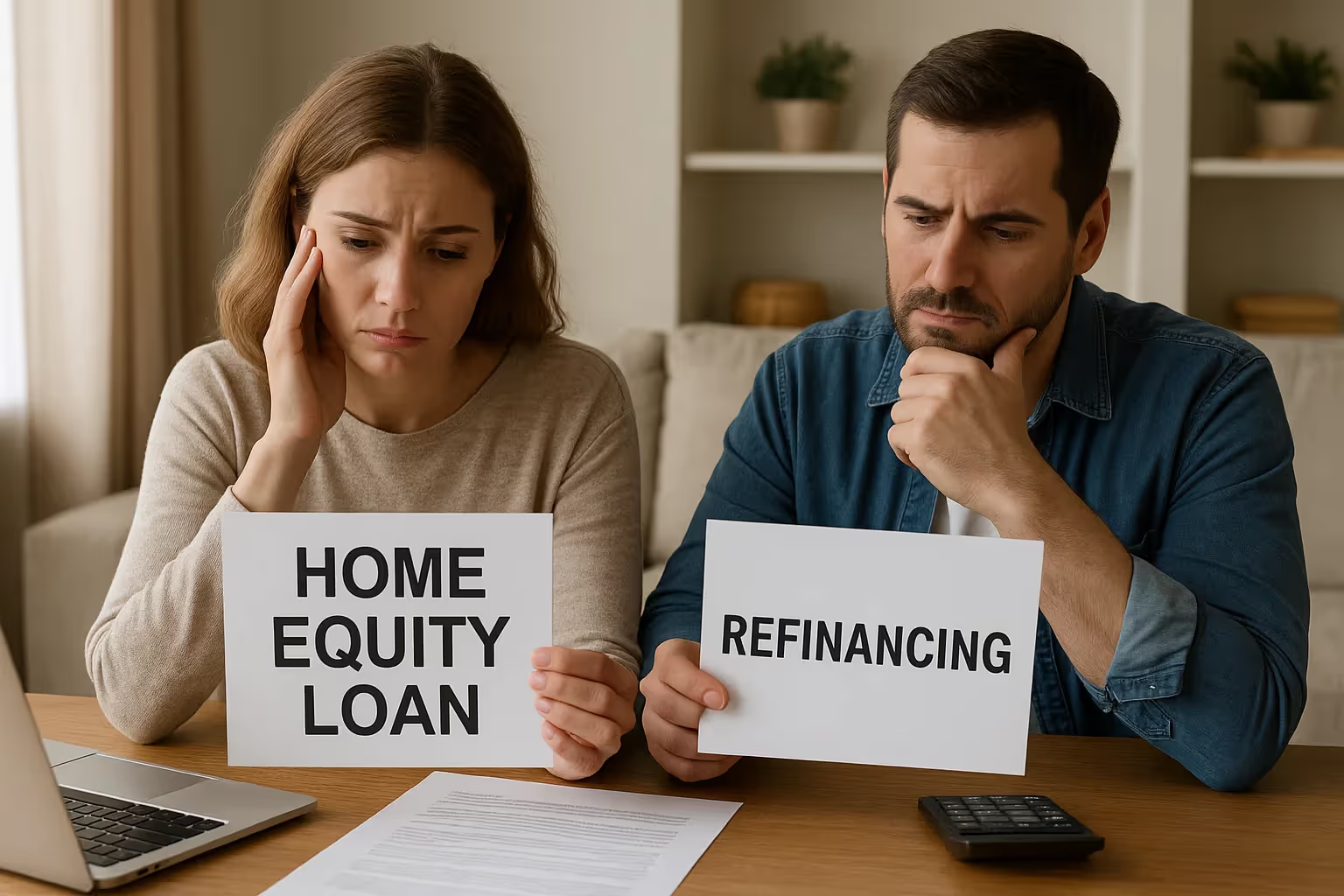
One popular way is through a home equity loan. This is where you get a lump sum of cash upfront, and you pay it back over time with fixed monthly payments. It's pretty straightforward, kind of like getting a second mortgage, but just for the amount you want to borrow against your equity. It can be great for big, one-time expenses like a major home renovation or consolidating some high-interest debt.
Another option is a Home Equity Line of Credit, or HELOC. This is more like a credit card secured by your house. You get approved for a certain amount, and you can borrow from it as needed during a set period, usually called the draw period. You'll typically make interest-only payments during this time. Once the draw period ends, you start paying back both the principal and interest.
Here's a quick look at how these options differ:
- Home Equity Loan:
- Get a lump sum of cash.
- Fixed interest rate and predictable monthly payments.
- Good for specific, planned expenses.
- HELOC:
- Revolving line of credit you can draw from as needed.
- Often has a variable interest rate, so payments can change.
- Flexible for ongoing projects or unexpected costs.
Remember, borrowing against your home's equity means you're taking on more debt. It's super important to make sure you can comfortably handle these new payments on top of your existing mortgage before you sign anything. You don't want to end up in a tight spot financially.
Debt Consolidation
Got a pile of credit card bills, a car loan, or maybe some personal loans hanging over your head? Refinancing your mortgage into a 30-year fixed loan can sometimes be a way to bundle all that debt together. The idea is to take out a larger mortgage than you currently owe, use that extra cash to pay off all those other debts, and then you're left with just one monthly mortgage payment.
This can simplify your finances and potentially lower your overall interest rate, especially if your other debts have high interest rates.
Here's how it generally works:
- Assess Your Debts: Figure out exactly how much you owe on credit cards, car loans, personal loans, and any other debts you want to consolidate. Note down the interest rates for each.
- Calculate Your Equity: Determine how much equity you have in your home. This is the difference between your home's current market value and the amount you still owe on your mortgage. You'll need enough equity to cover the debts you want to pay off, plus the costs of refinancing.
- Compare Rates: Look at the interest rate you could get on a 30-year fixed refinance versus the combined interest you're currently paying on your debts. If the mortgage rate is significantly lower, it might make sense.
- Factor in Costs: Refinancing isn't free. There are closing costs, appraisal fees, and other expenses. Make sure the savings from consolidating debt outweigh these costs.
While consolidating debt into your mortgage can seem like a good idea to get everything into one payment, it's important to remember you're trading potentially shorter-term, higher-interest debts for a longer-term debt secured by your home. If you don't change your spending habits, you could end up with more debt than before, and your house is on the line.
It's not always the best move for everyone. If you have a really low interest rate on your current mortgage, you might not want to refinance just to consolidate debt, as you'd be giving up that good rate. In some cases, a home equity loan or a home equity line of credit (HELOC) might be a better option, as they allow you to borrow against your equity without touching your primary mortgage. Always crunch the numbers carefully to see if it truly benefits your financial situation.
Lowering Monthly Payments
One of the most common reasons people look into refinancing is to get a handle on their monthly expenses. If your budget feels a bit tight each month, or you just want a little more breathing room, lowering your mortgage payment can make a big difference. This is often achieved by securing a lower interest rate than what you're currently paying, or by extending the loan term.
Refinancing to a lower interest rate can significantly reduce the amount of interest you pay over the life of the loan, directly impacting your monthly outflow. For instance, if you currently have a 30-year fixed mortgage at 7.5% and can refinance to a new 30-year fixed at 6.19%, you're looking at some immediate savings. The exact amount depends on your remaining balance, but even a percentage point or two can add up.
Here’s a quick look at how different loan terms can affect your payment and overall interest paid:
- 30-Year Fixed: Offers the lowest monthly payment, providing the most immediate financial relief. However, you'll pay more interest over the life of the loan compared to shorter terms.
- 20-Year Fixed: A middle ground. Your monthly payments will be higher than a 30-year loan, but lower than a 15-year. You'll pay less interest overall than a 30-year loan and build equity faster.
- 15-Year Fixed: Comes with the highest monthly payments but the lowest interest rate and the least amount of interest paid over the loan's life. You'll own your home free and clear much sooner.
When aiming to lower your monthly payments, it's important to consider your long-term financial picture. While a lower payment offers immediate relief, extending your loan term means you'll be paying interest for a longer period. Always weigh the short-term benefit against the long-term cost.
Sometimes, lenders might offer incentives like rate buydowns, which temporarily lower your interest rate for the first few years. While this can provide a nice cushion initially, make sure you understand how much your payments will increase once the buydown period ends. Comparing these options carefully is key to finding the refinance deal that truly helps your budget. You can explore current refinance rates to see what might be available for your situation 30-year fixed at 6.19%.
Paying Off Your Mortgage Sooner
While many people refinance to lower their monthly payments, another popular goal is to become mortgage-free ahead of schedule. Refinancing into a shorter loan term, like a 15-year mortgage, can help you achieve this. It means higher monthly payments, sure, but the savings on interest over the life of the loan can be substantial. Think tens of thousands of dollars, potentially.
This strategy is best suited for homeowners who have a bit more wiggle room in their budget and are comfortable with the increased monthly outlay. It's a trade-off: you pay more each month, but you pay off the principal faster, saving a bundle on interest and owning your home outright years sooner. It’s a solid move if you’re looking to build equity quickly and reduce your long-term debt.
Here’s a quick look at how a shorter term can impact your loan:
- Significantly less total interest paid: By paying down the principal faster, you minimize the amount of interest that accrues over time.
- Faster equity build-up: Owning more of your home sooner provides a greater sense of financial security.
- Mortgage-free living sooner: Imagine being free of that monthly payment years before you originally planned!
It’s worth noting that if you can’t swing the higher payments of a shorter term, you can still make progress by simply paying extra towards the principal on your existing 30-year loan. Many lenders allow you to make extra payments without penalty, and you can even set up bi-weekly payments to effectively make an extra monthly payment each year.
Deciding between a shorter term and sticking with a longer one often comes down to your financial comfort level and long-term goals. A shorter term offers big interest savings, but a longer term provides more payment flexibility. It's a personal finance puzzle, and the best solution depends on your unique situation.
The Bankrate Promise
You've got questions about your money, and we're here with answers. For more than 40 years, Bankrate's been helping people get a better handle on their finances. We aim to give you the advice and tools you need to feel good about your financial decisions, no matter what life throws your way.
We're an independent service, and we get paid by advertisers. This means you might see sponsored products or services listed on our site, or we might get paid if you click on certain links. This compensation can influence where and how products show up, but it doesn't change our advice or recommendations. We stick to strict editorial rules, so you can trust that our content is fair and unbiased.
Our advertisers don't pay us for good reviews. We provide a lot of free information on everything from mortgages to banking to insurance, but we don't list every single option out there. We try to keep everything up-to-date, but it's always a good idea to check directly with the providers for the latest details.
Our main goal is to help you make smarter money choices. We do this by offering interactive tools, calculators, and publishing original, objective content. We want you to be able to research and compare information freely, so you can make decisions with confidence.
When you're looking at mortgage rates, it's helpful to see how they stack up. For instance, as of December 12, 2025, the national average APR for a 30-year fixed refinance was around 6.67 percent. Comparing these averages can give you a baseline for what to expect when you shop for refinance deals.
Here's what you can expect from us:
- Objective Content: We create original articles and guides based on thorough research.
- Interactive Tools: Use our calculators and comparison tools to explore your options.
- Free Information: Access a wide range of financial information without charge.
- Transparency: We clearly explain how we make money and how our rates are determined.
Advertiser Disclosure
You've probably noticed that when you're looking for mortgage rates, especially for a 30-year fixed refinance, you'll see a lot of information. Some of it comes from companies that pay us to be here. Think of it like this: they advertise with us, and we get compensated for that. This compensation can influence where and how certain products show up on our site, like in lists or comparisons. It's important to know that this doesn't change the advice or recommendations we give you. We have strict rules about that.
Our advertisers don't pay us for good reviews. We aim to provide a wide range of information and tools for free, covering many financial services. However, we don't list every single company or offer out there. Also, while we try to keep everything up-to-date, it's always a good idea to check directly with the providers for the very latest details.
- We are an independent comparison service. Our goal is to help you make better money choices.
- We provide tools, calculators, and objective content to help you research and compare information.
- We partner with various financial institutions, but this doesn't affect our editorial integrity.
We want you to feel confident when making financial decisions. That's why we're upfront about how we make money and how it might affect the information you see.
How Bankrate Collects Mortgage Rates
So, how do we actually get these numbers you see on Bankrate? It's not just a wild guess, I promise. We have a pretty structured way of gathering mortgage rate information to give you a clear picture.
Basically, we look at a few different types of averages:
- National Rate and APR Averages: These are the daily and weekly numbers you'll often see. We get these by checking in with the five biggest banks and thrifts across the country. Think of it as a broad snapshot.
- Bankrate Monitor (BRM) National Index Rate Averages: This is a longer-running survey, reported weekly. It also pulls data from banks and thrifts, but it's been a consistent measure for a while now.
- "Top Offers": These are the rates you see advertised first on our rate tables, updated daily and weekly. They represent an average of what our partners are showing as their best deals for specific loan types and terms.
Comparing these different averages can be really helpful. Seeing the national average alongside the "top offers" can give you a good idea of how much potential savings might be out there if you shop around.
It's a process designed to give you a solid baseline and also show you what's possible when lenders compete for your business. We aim to be transparent about where these numbers come from so you can use them with confidence.
Understanding APR
When you're looking at refinancing your mortgage, you'll see a couple of numbers that seem similar but aren't quite the same: the interest rate and the Annual Percentage Rate, or APR. It's pretty important to get these straight because they tell you different things about the actual cost of your loan.
The interest rate is the basic price the lender charges you for borrowing their money. If you see a 6% interest rate, that's the cost of the loan itself. This is the number that directly affects your monthly payment for principal and interest.
The APR, though, is a bit more involved. Think of it as the total cost of borrowing money over the life of the loan. It includes that interest rate, but it also rolls in all the other fees and expenses you'll have to pay to get the loan. This can include things like origination fees, discount points, and other lender charges. Because it accounts for these extra costs, the APR will always be higher than the interest rate.
Here's a simple breakdown:
- Interest Rate: The cost of the borrowed money itself.
- APR: The interest rate PLUS most of the fees associated with the loan.
- Closing Costs: Fees paid at the end of the loan process (like appraisal or title insurance) that are often factored into the APR.
Why does this matter for refinancing? Well, a lender might advertise a really low interest rate, making their offer look super attractive. But if their APR is significantly higher due to hefty fees, you might end up paying more overall than you would with another lender who has a slightly higher interest rate but much lower fees. It's like comparing two grocery bills: one might have a lower price on milk, but if the other items are much cheaper, the second bill could be less overall.
When you're comparing refinance offers, don't just fixate on the advertised interest rate. Always ask for and carefully review the Loan Estimate, which will clearly show both the interest rate and the APR. This document is your best tool for understanding the true cost of the loan and making a smart comparison between different lenders. It helps you see the full picture beyond just the headline number.
When you're comparing offers, look beyond just the interest rate. Consider the APR, which includes fees, and also factor in closing costs. The goal is to find a refinance option that not only lowers your monthly payment but also makes financial sense for your long-term plans. Always do the math for your specific situation.
National Averages
When you're looking at refinancing, it's always a good idea to see where things stand nationally. It gives you a baseline, you know? Like, what are most people seeing out there?
As of Friday, December 12, 2025, the national average interest rate for a 30-year fixed refinance is sitting around 6.67%. That's a bit different from the average rate for a new 30-year fixed mortgage, which is currently closer to 6.33%.
Here's a quick snapshot of what the averages looked like on that day:
- 30-Year Fixed Refinance Rate: 6.61%
- 30-Year Fixed Refinance APR: 6.67%
It's important to remember these are just averages. Your personal rate could be higher or lower based on your credit score, loan amount, and the lender you choose. Think of these numbers as a starting point for your own research.
Shopping around is key. Freddie Mac research suggests that getting just one extra rate quote could save you about $1,500 over the life of the loan. Getting five quotes could save you even more.
These national figures are gathered from major banks and financial institutions across the country. They help paint a picture of the current market, but your own situation might lead you to different offers on Bankrate.
Lender Specific Rates
When you're looking to refinance your mortgage, especially into a 30-year fixed loan, remember that the advertised national averages are just a starting point. Each lender has its own set of rates, influenced by a bunch of factors, including their own business costs and how they assess risk. This is why shopping around is so important; you might find a much better deal with one bank than another.
Think of it like this: you wouldn't buy the first car you see, right? You'd check out a few dealerships, compare models, and see who offers the best price. Mortgages are no different. Lenders set their own rates, and these can differ quite a bit.
Here’s a quick look at what you might see, keeping in mind these are just examples and your actual rate depends on your financial situation:
Rates as of Friday, December 12, 2025
It's not just the interest rate, though. You'll also want to pay attention to the Annual Percentage Rate (APR), which gives you a more complete picture by including certain fees. Closing costs can also add up, so make sure you're comparing the total cost of the loan, not just the sticker price.
Don't get too caught up in just the interest rate you see advertised. Always ask for a Loan Estimate from each lender you're considering. This document breaks down all the costs, fees, and terms, making it much easier to compare offers side-by-side and figure out which one truly saves you the most money over time. It's the best way to see the whole financial picture.
When you talk to lenders, be sure to ask about:
- Any discount points they offer, which you can pay upfront to lower your interest rate.
- Rate lock periods – how long they'll guarantee the rate while your loan is processing.
- Any special offers or promotions they might be running.
- The specific fees they charge for things like appraisals, title insurance, and origination.
Getting quotes from at least three to five different lenders is a good rule of thumb. This gives you a solid basis for comparison and increases your chances of finding a rate that really fits your budget and financial goals for refinancing.
Wrapping It Up
So, thinking about a 30-year fixed refinance in 2025? It really comes down to what makes sense for your wallet and your future plans. While rates might not be at rock-bottom levels, they're sitting in a spot where many homeowners could see some real benefit, especially if your current mortgage has a higher rate. Remember, it's not just about the interest rate itself, but also about the total cost, including fees. Take the time to check your credit, compare offers from different lenders, and really crunch the numbers. A little effort now could mean significant savings down the road, making your homeownership journey a bit smoother.
Frequently Asked Questions
What exactly is a 30-year fixed refinance?
A 30-year fixed refinance means you're getting a new loan to replace your current mortgage. The interest rate on this new loan will stay the same for the entire 30 years you have to pay it back. This makes your monthly payments predictable, which is great for budgeting.
How do lenders decide what interest rate to give me for a refinance?
Lenders look at your financial health. This includes your credit score, how you've paid bills in the past, how much money you have saved, and your income. They want to make sure you're likely to pay back the loan. Things like inflation and the overall economy also play a role in setting rates.
Why would someone choose a 30-year refinance over a shorter loan?
The main reason is that the monthly payments are usually lower with a 30-year loan. This can free up money in your budget for other things. While you'll pay more interest over time compared to a 15-year loan, the lower monthly cost is a big plus for many people.
What's the average interest rate for a 30-year fixed refinance right now?
As of early December 2025, average rates for a 30-year fixed refinance are around 6.27% to 6.61%. Remember, this is just an average. Your personal rate could be higher or lower depending on your credit and other factors.
When is the best time to refinance into a 30-year mortgage?
It's a good idea to consider refinancing when interest rates have dropped significantly since you got your current mortgage. Also, if you need to lower your monthly payments to make your budget more comfortable or if you want to take out cash from your home's value (equity) for other needs.
What are the biggest benefits and drawbacks of a 30-year fixed refinance?
The biggest benefit is the lower monthly payment, which gives you more financial breathing room. The main drawback is that you'll likely pay more interest over the full 30 years compared to a shorter loan term like a 15-year mortgage.












Get in touch with a loan officer
Our dedicated loan officers are here to guide you through every step of the home buying process, ensuring you find the perfect mortgage solution tailored to your needs.
Options
Exercising Options
Selling
Quarterly estimates
Loans
New home

Stay always updated on insightful articles and guides.
Every Monday, you'll get an article or a guide that will help you be more present, focused and productive in your work and personal life.








.png)
.png)
.png)
.avif)
.avif)
.avif)
.png)
.png)
.png)
.avif)
.png)
.png)
.avif)
.png)
.avif)
.png)
.avif)
.avif)