


Unlock Savings: Your Guide to the Best Mortgage Rate for Refinance in 2025
December 1, 2025
Unlock savings in 2025 with our guide to the best mortgage rate for refinance. Learn how to lower payments & maximize your home equity.

Thinking about refinancing your home mortgage in 2025? It's a big decision, and honestly, it can feel a bit overwhelming with all the numbers and terms. But here's the deal: a smart home mortgage refinance can seriously help your wallet. Maybe you want to lower your monthly payments, pay off your loan faster, or even pull some cash out for a big project. Whatever your reason, understanding the process and knowing when to act is key. This guide breaks down how to approach a home mortgage refinance so you can make the best choice for your financial situation.
Key Takeaways
- Even a small drop in your mortgage rate for refinance can mean saving a good chunk of money each month. This extra cash can go towards bills, saving, or paying off other debts faster.
- Don't forget about closing costs when you refinance. They can add up, so figure out how long it'll take for your monthly savings to cover them. Sometimes, it's not worth it if it takes too long.
- Refinancing to a new 30-year loan might lower your monthly payment, but it could also mean paying on your mortgage for longer. Think about if those long-term costs are worth the short-term relief.
- Your credit score is a big deal when it comes to getting the best mortgage rate for refinance. A higher score usually means a better rate.
- Shopping around and comparing offers from different lenders is super important. Don't just go with the first one you find; you might find a much better deal elsewhere.
Understanding Your Refinance Goals
So, you're thinking about refinancing your mortgage in 2025. That's a pretty big deal, and honestly, it can feel a bit much with all the numbers and terms flying around. But here's the thing: a smart refinance can really help your bank account. Maybe you want to lower those monthly payments, pay off your loan faster, or even pull some cash out for a big project you've been dreaming about. Whatever your reason, figuring out exactly why you're doing this before you even look at rates is super important. It's like planning a trip – you need to know where you're going before you pack your bags.
Before you get caught up in the excitement of a lower interest rate, take a moment to really think about what you want to achieve. Your goals will guide everything else. Here are some common reasons people refinance:
- Lowering Monthly Payments: This is a big one for many folks. If your budget feels tight or you just want more breathing room each month, a lower interest rate or a longer loan term can make a difference.
- Paying Off Your Mortgage Sooner: If you've got a bit more cash flow these days, shortening your loan term can save you a ton of money on interest over the years. Imagine being mortgage-free sooner!
- Accessing Home Equity: Your home's value has probably gone up since you bought it. Refinancing can let you borrow against that built-up equity for things like home improvements, paying for school, or tackling other large expenses.
- Debt Consolidation: Got some high-interest debt, like credit cards? Rolling that into your mortgage can simplify your payments and potentially lower your overall interest rate.
It's easy to get excited about a lower interest rate, but remember that refinancing isn't free. There are costs involved. Make sure your main goal is something you can actually reach and that it's worth the effort and expense.
Knowing your primary objective helps you focus on the refinance options that actually make sense for your situation. It's not just about getting a new piece of paper for your loan; it's about making your money work better for you.
Current Mortgage Rate Environment
Okay, so let's talk about where mortgage rates are at right now, as we look towards 2025. It's been a bit of a mixed bag, honestly. Rates have been doing this up-and-down dance, influenced by all sorts of economic news. Think inflation reports, job numbers, and what the Federal Reserve is up to.
Right now, things seem to be trending a bit lower than they were earlier in the year. For instance, as of December 1, 2025, the average rate for a 30-year fixed refinance loan is hovering around 6.27% according to Zillow average refinance rate. Other sources show similar figures, with 30-year fixed rates generally in the mid-6% range. It's not the super-low rates we saw a couple of years back, but it's definitely a shift.
Here's a quick look at some average refinance rates you might see:
- 30-Year Fixed: Around 6.25% to 6.35%
- 15-Year Fixed: Typically in the 5.60% to 5.77% range
- 7/1 ARM: Often seen around 5.92%
It's important to remember that these are just averages. Your actual rate will depend on a bunch of things, like your credit score, how much you're putting down, and the specific lender you choose.
While headline rates are important, don't forget to look at the bigger economic picture. Factors like employment data and inflation can cause rates to move, sometimes quickly. Keeping an eye on these trends can help you time your refinance effectively.
Many homeowners are still sitting on rates well below 5%, so refinancing might not make sense for everyone. However, if your current rate is significantly higher, a drop of even half a percent could mean real savings over the life of your loan. It's all about comparing what you have now with what's available and seeing if the numbers add up for you.
When Interest Rates Dip Significantly
You know how sometimes you see a big sale at your favorite store and think, 'Now's the time to buy!'? Refinancing your mortgage works a bit like that. When the general interest rates for mortgages drop noticeably from when you first got your loan, it's a big signal to pay attention. We're not talking about tiny, almost unnoticeable shifts here. A significant drop, maybe a full percentage point or even half a percent, can really add up over the years you'll be paying off your home.
Think about it: if you locked in a mortgage at 6% a few years ago, and now the average rate for a similar loan is down to 5%, that's a pretty sweet deal. It means your monthly payments could go down, and you'd pay less interest overall. It’s like getting a discount on one of the biggest debts you'll ever have.
So, how do you know when rates have dipped enough to make refinancing worthwhile? Keep an eye on financial news and websites that track mortgage rate trends. They often report average rates for different loan types, like 30-year fixed or 15-year fixed. If you see those averages falling and they're considerably lower than your current rate, it's time to start crunching some numbers.
Here's a simple way to look at it:
- Your Current Rate: What you're paying now.
- Market Rate: The average rate available for new mortgages today.
- The Difference: How much lower the market rate is compared to yours.
If that difference is substantial – say, 0.5% or more – it's usually worth exploring further. Don't just guess, though. Use online calculators to see exactly how much you could save each month and over the life of the loan. Remember, though, refinancing isn't free. There are closing costs involved, so you need to make sure the savings from the lower rate will cover those costs within a reasonable timeframe, usually a few years.
It's easy to get caught up in just the advertised interest rate, but a slightly higher rate with significantly lower closing costs might actually be a better deal for you, especially if you plan to move or sell before the loan term is up. Always do the math for your specific situation.
Basically, a significant dip in interest rates creates an opportunity. It's your chance to potentially lower your monthly housing expense and save a good chunk of money in the long run. Just make sure you do your homework and compare offers to find the best fit for your financial situation.
Leveraging an Improved Credit Profile
So, your credit score has seen some love since you first took out your mortgage. That's fantastic news for your refinance plans! Think of your credit score as your financial report card. Lenders use it to figure out how risky it might be to lend you money. A higher score generally means you're seen as a safer bet, and that usually translates to a lower interest rate. If your score isn't where you'd like it to be, spending some time improving it before you apply can really pay off. Paying bills on time, reducing credit card balances, and checking your credit report for errors are good first steps. It might seem like a small thing, but even a quarter-point difference in your rate can save you thousands over the life of the loan. Improving your credit score by 100 points in a year is achievable through consistent on-time payments, maintaining a credit utilization rate below 10%, and actively paying down debt. These actions can significantly impact your financial standing and potentially open doors to better mortgage refinancing options.
Here are some ways to give your score a boost before you start shopping:
- Pay down credit card balances: Aim to keep your credit utilization ratio (the amount of credit you're using compared to your total available credit) below 30%, and ideally below 10%. This shows you're not overextended.
- Check for errors: Get a copy of your credit report from each of the three major bureaus (Equifax, Experian, and TransUnion) and dispute any inaccuracies. Mistakes can drag your score down.
- Pay bills on time, every time: This might sound obvious, but late payments can really hurt your score. Set up auto-pay or reminders if you need to.
Lenders need to see the whole picture of your financial life to approve your refinance. This means digging up quite a bit of paperwork. Having these documents organized and ready will speed things up considerably.
Planning for Recouping Closing Costs
So, you're thinking about refinancing. That's great, especially if you can snag a better rate. But hold on a sec, because refinancing isn't exactly free. There are always costs involved, and they can add up pretty quickly. We're talking about things like appraisal fees, title insurance, recording fees, and sometimes even a prepayment penalty on your old loan if you have one. These are often called closing costs, and they can easily be a few thousand dollars, sometimes even more.
The big question then becomes: how long will it take for the money you save each month to cover these upfront expenses? This is what we call your break-even point. It's super important to figure this out before you commit.
Let's say your closing costs come to $8,000. If your new mortgage saves you $300 a month compared to your old one, it'll take you about 27 months (or just over two years) to recoup that $8,000. That means for the first couple of years, you're not actually pocketing extra cash; you're just paying back what you spent to get the new loan.
Here’s a quick look at what goes into those costs:
- Origination Fees: Charged by the lender for processing the loan.
- Appraisal Fee: To determine your home's current market value.
- Title Insurance: Protects against ownership claims.
- Recording Fees: Paid to the local government to record the new mortgage.
- Credit Report Fee: For pulling your credit history.
Most folks suggest you should plan on staying in your home for at least two to three years after refinancing. If you think you might sell your house or refinance again before you hit that break-even point, the whole exercise might not be worth it financially. It’s like buying a fancy new gadget on sale – you want to use it enough to make the purchase worthwhile. Thinking about your long-term plans for the home is key here. If you're planning to stay put for a while, then recouping those costs becomes a much more realistic goal. You can find more details on typical closing costs and fees to help you estimate your own situation.
Comparing Lender Offers
So, you've done your homework, figured out your goals, and maybe even seen your credit score get a little boost. Now comes the part where you actually start talking to lenders. This is where the legwork really comes in. Don't just go with the first lender you talk to, or even the second. You need to shop around. Different lenders have different rates, fees, and terms. It's a good idea to get quotes from at least three to five different places, including banks, credit unions, and online mortgage companies. A mortgage broker can be super helpful here, as they work with multiple lenders and can often find competitive rates you might not find on your own.
When comparing, look beyond just the interest rate. Consider the Annual Percentage Rate (APR), which includes fees, and also factor in closing costs. The goal is to find a refinance option that not only lowers your monthly payment but also makes financial sense for your long-term plans.
Here’s a quick way to compare:
- Interest Rate: The base cost of borrowing.
- APR: The interest rate plus most fees, giving a broader picture of the loan's cost.
- Closing Costs: Fees associated with finalizing the loan (appraisal, title insurance, etc.).
- Loan Term: The length of time you have to repay the loan.
It's easy to get caught up in just the advertised interest rate, but a slightly higher rate with significantly lower closing costs might actually be a better deal for you, especially if you plan to move or sell before the loan term is up. Always do the math for your specific situation. Exploring effective methods to obtain the best rates available in the current market is key to maximizing your savings. You can negotiate mortgage rates by shopping around and gathering quotes from multiple lenders.
It's easy to get caught up in the excitement of a lower rate, but don't forget to review the final documents thoroughly. Small details can sometimes get overlooked, and you want to be sure everything matches what you agreed upon.
When you're looking at offers, you might see different types of loans. For instance, as of late November 2025, you could find rates around 3.68% for a 5-year fixed term, or 3.45% for a 5-year variable term current mortgage options. Keep in mind that these are just averages, and your specific rate will depend on your financial profile. Make sure you're comparing apples to apples – a 30-year fixed rate from one lender against a 30-year fixed rate from another, for example. Don't be afraid to ask questions about anything you don't understand. The more informed you are, the better decision you'll make.
Understanding APR vs. Interest Rate
When you're looking at refinancing your mortgage, you'll see a couple of numbers that seem similar but aren't quite the same: the interest rate and the Annual Percentage Rate (APR). It's super important to get these straight because they tell you different things about the actual cost of your loan.
The interest rate is pretty straightforward. It's basically the price the lender charges you for borrowing their money, expressed as a percentage. If you see a 5% interest rate, that's the base cost of the loan itself. This is the number that directly impacts your monthly principal and interest payment.
Now, the APR is a bit more involved. Think of it as the total cost of borrowing money over the life of the loan. It includes that interest rate, but it also rolls in all the other fees and expenses you'll have to pay to get the loan. This can include things like origination fees, discount points, mortgage insurance premiums, and other lender charges. Because it accounts for these extra costs, the APR will always be higher than the interest rate.
Here's a simple breakdown:
- Interest Rate: The cost of the borrowed money itself.
- APR: The interest rate PLUS most of the fees associated with the loan.
- Closing Costs: Fees paid at the end of the loan process (appraisal, title insurance, etc.) that are often factored into the APR.
Why does this matter for refinancing? Well, a lender might advertise a really low interest rate, making their offer look super attractive. But if their APR is significantly higher due to hefty fees, you might end up paying more overall than you would with another lender who has a slightly higher interest rate but much lower fees. It's like comparing two grocery bills: one might have a lower price on milk, but if the other items are much cheaper, the second bill could be less overall.
When you're comparing refinance offers, don't just fixate on the advertised interest rate. Always ask for and carefully review the Loan Estimate, which will clearly show both the interest rate and the APR. This document is your best tool for understanding the true cost of the loan and making a smart comparison between different lenders. It helps you see the full picture beyond just the headline number.
For example, imagine two refinance offers:
In this scenario, Lender A has a lower interest rate, but Lender B has a slightly higher interest rate but a lower APR and fewer fees. Depending on how long you plan to keep the mortgage, one might be a better deal than the other. It's worth checking out mortgage rate predictions to see how current trends might affect your long-term savings.
Understanding the difference helps you shop smarter and make sure you're getting the best deal for your specific situation, not just the one that looks best on paper at first glance.
Exploring Rate Buy-Down Options
Sometimes, lenders offer something called a "rate buy-down." It's basically a way to pay an upfront fee, often called "points," to get a lower interest rate on your mortgage. You can choose to buy down the rate for the entire life of the loan, or just for a specific number of years. For example, paying one point might knock about 0.25% off your interest rate. This can be a smart move if you plan on staying in your home for a long time and have the extra cash available. Over many years, those savings can really add up.
But here's the thing: you absolutely have to do the math. Figure out how long it will take for the money you save on interest to equal the cost of those points. If you end up moving or refinancing again before you reach that break-even point, you might not actually save any money in the long run. It's a gamble, and you want to make sure the odds are in your favor.
Here's a quick breakdown of what to consider:
- Cost of Points: How much will it cost to buy down the rate?
- Rate Reduction: How much will your interest rate actually decrease?
- Break-Even Point: How many months or years will it take for the savings to cover the cost of the points?
- Your Timeline: How long do you realistically plan to stay in the home?
Paying points to lower your rate is a financial decision that requires careful calculation. Don't just assume it's a good deal; verify it with your own numbers and your specific situation. It's about making sure the upfront cost leads to genuine long-term savings.
It's also worth noting that some mortgages might have features that allow buyers to take over your existing loan, including the rate, if you sell your home. This is called mortgage assumability, and it can be a real advantage if rates have gone up since you first got your loan. It's a less common feature, but definitely something to ask about when you're looking into your options. You can explore how this might work for future homeowners by looking into transferring mortgage rates.
When you're comparing different lenders, make sure you ask about rate buy-down options. It might not be offered by everyone, but if it is, it could be another tool in your savings toolkit. Just remember to weigh the upfront cost against the potential long-term benefits.
Benefits of Insured vs. Uninsured Rates

When you're looking at refinancing, you'll notice that mortgage rates aren't all the same. Some come with a bit of extra protection, and others don't. Think of it like buying a car. You can get the basic model, or you can add on those extra safety features.
Insured rates often have a slightly higher interest rate attached. This might seem like a downside at first glance, but that extra bit of interest is essentially paying for a safety net. If you were to hit a rough patch financially, maybe miss a payment or two, the insurance on the loan could offer some protection. It's like having a cushion.
Uninsured rates, on the other hand, might show a lower advertised number. That can be really tempting. However, these loans usually come with stricter terms and fewer options if your financial situation changes unexpectedly. You're basically taking on more of the risk yourself.
Here’s a quick breakdown:
- Insured Rates:
- Potentially slightly higher interest rate.
- Offers a safety net for missed payments or financial hardship.
- Provides more peace of mind.
- Uninsured Rates:
- Often advertised with a lower interest rate.
- Comes with stricter terms and less borrower protection.
- Requires a stronger personal financial cushion.
The decision between an insured and uninsured rate really comes down to your personal comfort level with risk and your confidence in your future financial stability. It's a trade-off between a potentially lower upfront cost and having that extra layer of security.
Ultimately, the best choice depends on your individual circumstances and how much security you feel you need.
Assessing Mortgage Assumability
Okay, so let's talk about something a little less common but potentially super useful: mortgage assumability. This isn't something you see every day, but if your current mortgage has this feature, it could be a real game-changer when you decide to sell your home. Basically, an assumable mortgage means that a buyer can take over your existing loan, including its interest rate, when they purchase your property.
This can be a huge advantage, especially if interest rates have gone up significantly since you first got your mortgage. Imagine you locked in a 3% rate a few years ago, and now rates are hovering around 6% or 7%. A buyer would be thrilled to take over your loan at that lower rate instead of getting a new one at the higher market price. It makes your home more attractive to potential buyers because they can potentially save a lot of money on interest payments over the life of the loan. It's a big perk for them and can help your home sell faster.
Here's a quick rundown of why it matters:
- Buyer's Advantage: Buyers can secure a lower interest rate than current market offerings, saving them money.
- Seller's Advantage: Can make your home more appealing and potentially speed up the sale process.
- Market Conditions: This feature is most valuable when interest rates have risen since you obtained your loan.
However, it's not always straightforward. The lender still needs to approve the buyer, so they'll go through a credit check and underwriting process, just like with any new loan. You can't just hand off your mortgage to anyone. Also, not all mortgage types are assumable. Government-backed loans like FHA and VA loans are often assumable, but conventional loans might have different rules. It's definitely worth checking the specifics of your loan documents to see if this is an option for you. If it is, it's a feature you'll want to highlight when you decide to sell your place. It's a nice little bonus that can make a big difference for both you and the next homeowner. You can find out more about mortgage assumption and how it works.
Rate-and-Term Refinancing
So, you're thinking about refinancing your mortgage. One of the most common ways people do this is through a rate-and-term refinance. Basically, this means you're getting a new loan to pay off your old one, and you're either trying to get a better interest rate or change the length of your loan, or maybe both. It's not about pulling cash out of your home's equity; it's purely about adjusting the terms of your existing mortgage.
The main goal here is usually to lower your monthly payments or reduce the total amount of interest you'll pay over the life of the loan. Sometimes, people also use this type of refinance to switch from an adjustable-rate mortgage (ARM) to a fixed-rate loan, which gives you more payment predictability. It's a solid move if you plan on staying in your home for a while and can snag a significantly lower rate than what you currently have.
Here's a quick rundown of what you're typically looking at:
- Lowering Your Interest Rate: This is the big one. If market rates have dropped since you got your original mortgage, you could save a good chunk of change. Even a small drop, like half a percent, can add up to hundreds of dollars saved each year.
- Changing Your Loan Term: You might want to shorten your loan term, say from 30 years down to 15. This means higher monthly payments, but you'll pay off your house much faster and save a ton on interest overall. On the flip side, some people extend their term to lower their monthly payments, though this usually means paying more interest in the long run.
- Switching Loan Types: If you have an ARM and are worried about future rate hikes, refinancing to a fixed-rate mortgage can give you peace of mind. Your monthly payment will stay the same for the entire loan period.
When you're looking at rate-and-term refinances, it's super important to compare offers from different lenders. Don't just look at the interest rate; check out the Annual Percentage Rate (APR) too, as it includes other fees. Also, be mindful of closing costs. Sometimes, the savings from a lower rate might not cover these upfront expenses if you don't plan to stay in the home long enough.
You need to do the math to see if the savings really outweigh the costs. A mortgage refinance calculator can be your best friend here, helping you figure out how long it will take to break even on those closing costs.
Think about your long-term financial picture. Are you planning to sell the house in a few years, or is this your forever home? Your answer will help determine if a rate-and-term refinance makes sense for you right now.
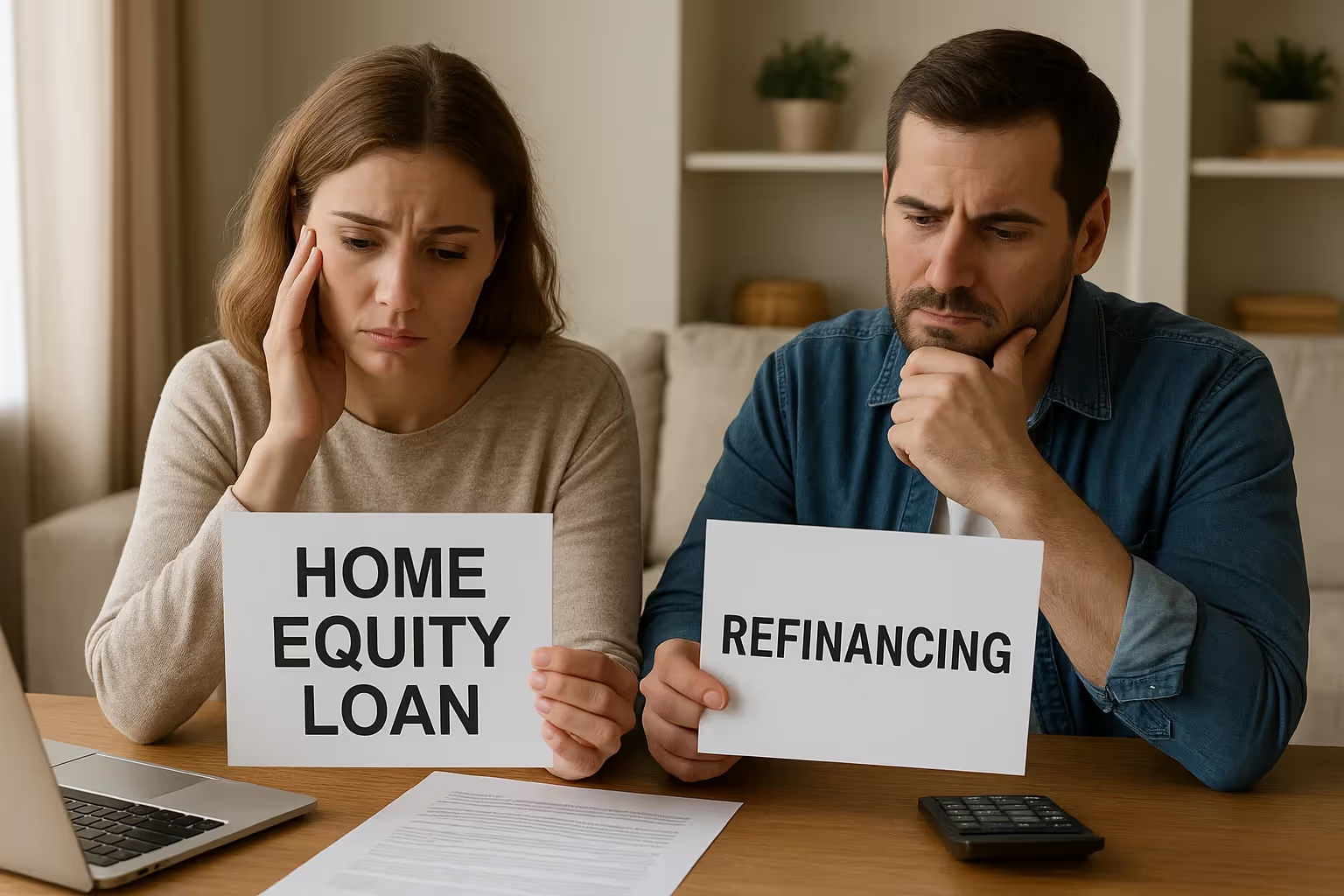
Home Equity Loans as Alternatives

Sometimes, refinancing your entire mortgage isn't the best move, especially if you snagged a super low interest rate a few years back. That's where home equity loans come in handy. They let you borrow against the value you've built up in your home without touching your current mortgage terms. Think of it as getting a separate loan, secured by your house, for a specific amount.
This can be a smart way to get cash for big projects, like a kitchen renovation or paying for college, without messing with that great rate you already have. Plus, the interest rates on home equity loans are often lower than what you'd find on personal loans or credit cards. It's a way to access your home's value for specific needs.
Here's a quick rundown of why you might consider one:
- Keep your existing mortgage: Your original loan, with its potentially fantastic interest rate, stays exactly as it is.
- Fixed loan amount: You get a lump sum upfront, which can be easier to budget for than a revolving line of credit.
- Predictable payments: Since it's a fixed loan, your monthly payments are usually the same throughout the loan's life.
- Potential tax benefits: In some cases, the interest paid on a home equity loan used for home improvements might be tax-deductible. (Always check with a tax professional on this one!).
It's important to remember that a home equity loan adds another debt payment to your monthly obligations. Make sure you can comfortably afford both your original mortgage payment and the new home equity loan payment before you sign anything.
Home Equity Lines of Credit (HELOCs)
So, you've got some equity built up in your home. That's great! It means you own a good chunk of it outright. Beyond just refinancing your whole mortgage, there are other ways to tap into that value. One option is a Home Equity Line of Credit, or HELOC. Think of it like a credit card, but secured by your house. You get approved for a certain amount, and you can draw from it as you need it, paying interest only on what you use. It's not a lump sum like a cash-out refinance; it's more flexible.
This can be super handy for ongoing expenses or projects that pop up over time. Maybe you're planning a series of home improvements, or you want a safety net for unexpected costs. A HELOC lets you access funds when you need them, and you only pay interest on the amount you've borrowed. Once you pay some of it back, you can often borrow it again during a set period, called the draw period.
Here's a quick rundown of how HELOCs generally work:
- Draw Period: This is the time, usually 5-10 years, when you can borrow money from your HELOC. You'll typically make interest-only payments during this phase.
- Repayment Period: After the draw period ends, you can no longer borrow funds. You'll then start paying back both the principal and interest on the amount you've borrowed. This period can last 10-20 years.
- Interest Rates: HELOCs often come with variable interest rates, meaning they can go up or down based on market conditions. This is a key difference from a fixed-rate refinance.
HELOCs offer a flexible way to access your home's equity, but it's important to understand the variable interest rates and the repayment structure. Make sure you can handle potential payment increases if rates rise.
It's a different approach than a full refinance. With a HELOC, your original mortgage stays in place, and you get a second loan against your home's equity. This can be a good strategy if you secured a really low interest rate on your first mortgage and don't want to lose it by refinancing the entire loan.
Gathering Your Current Mortgage Information
Before you even start thinking about new rates or lenders, you really need to know what you're working with right now. It’s like trying to plan a road trip without knowing where you're starting from – doesn't make much sense, does it? Pull out your most recent mortgage statement. This document is your financial roadmap for your current loan. You'll want to jot down a few key details.
Here's what to look for:
- Current Interest Rate: What's the percentage you're paying now? This is the benchmark against which you'll compare potential new rates.
- Remaining Balance: How much do you still owe on the loan?
- Loan Term: How many years are left on your mortgage? Are you 10 years into a 30-year loan, or closer to the end?
- Mortgage Type: Is it a fixed-rate loan, or an adjustable-rate mortgage (ARM)? This matters a lot for how rates might affect you.
- Monthly Payment: What's your current principal and interest payment?
- Prepayment Penalties: Check if your current loan has any fees for paying it off early. This can sometimes be a hidden cost that eats into your refinance savings.
Knowing these specifics helps you understand what you might be able to change and what potential costs you might run into. It's not always about the headline rate; sometimes the details matter more.
Don't forget to also consider your credit score. Lenders will look at this very closely when you apply for a refinance. If your credit has improved since you first got your mortgage, you're in a great position to potentially get a better rate. If not, it might be worth looking into ways to boost it before you start shopping around for a new loan. Getting a handle on your current mortgage details is the first step to figuring out if refinancing makes sense for you. It's a good idea to have this information handy when you start talking to lenders about refinancing options.
Researching Your Home's Current Value
Before you even start thinking about refinancing, you really need to get a handle on what your house is actually worth right now. It's not just about what you paid for it, or what you think it's worth. Lenders will want to know the current market value, and this number directly impacts your Loan-to-Value (LTV) ratio, which is a big deal for them. A lower LTV usually means better terms for you.
So, how do you figure this out? It's not rocket science, but it does take a little digging.
- Check recent sales: Look at what similar homes in your neighborhood have sold for recently. Websites like Zillow or Redfin can give you a starting point, but remember these are just estimates.
- Consider improvements: Did you add a new deck, renovate the kitchen, or finish the basement since you bought the place? These upgrades can definitely bump up your home's value.
- Factor in the market: Is the housing market in your area hot, or is it cooling down? This general trend will influence your home's worth.
Online tools are helpful for a quick look, but for a truly accurate picture, you'll likely need a professional appraisal later in the refinancing process. This is the number the lender will ultimately rely on.
Knowing your home's current value is more than just a number; it's a key piece of information that helps determine how much equity you have. Equity is your stake in the home, and the more you have, the more attractive you are to lenders, potentially leading to better refinance rates and terms. It's like having more skin in the game.
Don't just guess your home's value. Taking the time to research it properly sets a solid foundation for your entire refinance application and helps you understand your true financial position.
Calculating Potential Savings
So, you're thinking about refinancing. That's great! But how much money can you actually expect to save? It's not just about looking at a lower interest rate; you've got to crunch some numbers to see the real picture.
First off, you need to know your current mortgage inside and out. How much do you still owe? What's your current interest rate? How many years are left on the loan? Having this info handy is key.
Then, you'll want to look at what a new loan might look like. What kind of interest rate are you aiming for? Do you want to stick with a 30-year term, or maybe go for a 15-year to pay it off faster? Playing with these numbers can show you different monthly payment amounts.
But don't forget the costs involved in refinancing! There are fees for appraisals, title insurance, lender processing, and more. These can add up, sometimes to thousands of dollars. You need to figure out when those monthly savings will actually cover these upfront costs. This is called your break-even point.
Let's look at a quick example:
Remember, these are just examples. Your actual savings will depend on your specific loan details and the rates you qualify for.
The biggest savings often come from reducing the total interest paid over the life of the loan, not just the monthly payment. It's about making your money work smarter for you in the long run.
Here are some things to consider:
- Monthly Payment Reduction: This is often the most noticeable change. A lower payment can free up cash for other expenses or savings goals.
- Total Interest Paid: Refinancing can significantly cut down the total amount of interest you pay over the years, especially if you're moving from a high rate to a lower one.
- Break-Even Point: Calculate how many months it will take for your monthly savings to equal your closing costs. If you plan to move or refinance again before reaching this point, the savings might not be worth it.
By doing this math, you can get a clear idea of whether refinancing makes financial sense for your situation.
Speaking With Mortgage Professionals
Talking to mortgage professionals is a big step in the refinance process. It’s not just about getting a rate; it’s about finding the right fit for your situation. Think of them as guides who can help you understand all the options out there. They can explain the nitty-gritty details that might seem confusing at first glance.
When you talk to lenders, remember to ask questions. Lots of them. It’s your money and your home, so you deserve to know exactly what’s going on. Here are some things to discuss:
- Your specific refinance goals: Are you trying to lower your monthly payment, pay off the loan faster, or pull cash out?
- Current market conditions: How are rates looking right now, and what’s the forecast?
- Different loan types: What are the pros and cons of fixed-rate versus adjustable-rate mortgages for your situation?
- Closing costs and fees: Get a clear breakdown of all the expenses involved.
- The timeline: How long will the refinance process likely take?
Don't be afraid to shop around with multiple lenders. You wouldn't buy a car without checking prices at a few dealerships, right? Your mortgage is no different. You need to compare what different lenders are offering. Don't just stick with your current bank; check out credit unions, online lenders, and mortgage brokers. They all have different rates and fees, and even a small difference can add up over time. Getting quotes from at least three different lenders gives you a good baseline. You can find some of the top mortgage refinance lenders for 2025 to start your search here.
It’s also a good idea to have your documents ready. This includes proof of income, your current mortgage statement, and details about your assets. Being prepared makes the conversation much smoother and helps the professional give you more accurate advice. They can help you figure out if refinancing makes sense for you right now and what kind of savings you might expect.
Remember, the goal is to find a loan that improves your financial standing. A good mortgage professional will be transparent about all costs and help you understand the long-term implications of your decision. They should be focused on your needs, not just making a sale.
Considering Long-Term Plans
When you're thinking about refinancing, it's not just about the numbers today. You've got to look ahead, too. What do you see yourself doing with your home in the next five, ten, or even twenty years? Are you planning to stay put for the long haul, or might you sell in a few years? This stuff really matters.
For instance, if you plan to sell your home in, say, three years, taking on a 30-year mortgage with a slightly lower rate might make more sense than a 15-year loan. Why? Because a shorter term means higher monthly payments, and you might not be in the house long enough to see the full benefit of paying it off faster. On the flip side, if you're settled and plan to stay for decades, shortening your loan term could be a fantastic way to build equity faster and be mortgage-free much sooner. It's all about matching the loan to your life.
Here are a few things to ponder:
- How long do you realistically plan to live in this home?
- Are there any major life events on the horizon? (e.g., kids going to college, retirement)
- What are your financial goals beyond just the mortgage payment? (e.g., saving for retirement, other investments)
Refinancing can be a powerful tool, but it needs to fit into your bigger financial picture. Don't just focus on the immediate savings; think about how the new loan aligns with where you want to be in the future. It's about making your home work for your long-term aspirations.
Also, consider if you might want to tap into your home's equity down the road. A cash-out refinance can give you funds now, but it changes your loan terms. If you think you might need access to cash later without altering your current mortgage, exploring options like a home equity loan might be a better fit. Thinking about these future possibilities now can save you a lot of headaches later.
Impact of Rate Fluctuations
Mortgage rates aren't static; they move around. Think of it like the weather – sometimes it's sunny, sometimes it's cloudy. These shifts can really affect your mortgage, especially when you're thinking about refinancing. If you got your loan when rates were high, and now they've dropped, that's your signal to look closer.
Even a small dip in rates can add up to significant savings over the life of your loan. It's not just about shaving a few dollars off your monthly payment; it's about how much interest you pay back to the bank over 15 or 30 years. When rates go up, refinancing might not make sense, but when they go down, it can be a smart financial move.
Here's a quick look at how rates have been behaving:
- Late November 2025: Average 30-year fixed refinance rate was around 6.28%.
- December 1, 2025: Average 30-year fixed rate dipped slightly to 6.35%, with 15-year fixed at 5.768% and 7/1 ARM at 5.924%.
These numbers show that rates can change, sometimes quickly. It's why keeping an eye on the market is a good idea, especially if you're planning to refinance. You want to catch those moments when rates are favorable.
The Federal Reserve's actions, economic health, and even global events can all play a role in where mortgage rates land. It's a complex system, but understanding the general trends helps you make better decisions for your own finances. Don't just react to headlines; look at the actual numbers and how they might fit your situation.
When rates fluctuate, it impacts affordability. A lower rate means you can potentially borrow the same amount for less money each month, or you might be able to afford a more expensive home if you were buying. For refinancing, it directly translates to how much you can save. It's always a good idea to check current mortgage rates to see if refinancing makes sense for you right now. Remember, the goal is to get the best deal possible for your specific financial situation.
Key Factors Influencing Rates
So, what actually makes mortgage rates go up or down? It's not just some random number generator, thankfully. A bunch of things are at play, and understanding them can help you figure out when might be the best time to refinance.
First off, the big picture economy really matters. Think about inflation – when prices are climbing, lenders often charge more interest to keep up. The job market is another piece of the puzzle. If lots of people have jobs, the economy is usually doing well, and that can influence rates. The Federal Reserve, which is like the central bank of the U.S., also plays a huge role. Their decisions about interest rates can send ripples through the whole financial system, affecting mortgage rates too.
Then there's the 10-year Treasury note. It sounds technical, but basically, mortgage rates tend to follow what happens with these government bonds. When the yields on those go up, mortgage rates usually follow suit. It’s a pretty reliable indicator, though not the only one.
On a more personal level, your own financial situation is a big deal. Lenders look at a few key things about you:
- Your Credit Score: This is a number that tells lenders how likely you are to pay back a loan. A higher score generally means a better rate because you're seen as less of a risk.
- Home Equity: This is the difference between what your home is worth and how much you still owe on your mortgage. Having more equity can sometimes get you a better rate.
- Your Debt-to-Income Ratio: Lenders want to see that you can handle your current debts plus a new mortgage payment. A lower ratio is usually better.
It's easy to get caught up in the daily rate changes, but remember that your personal financial situation is the most important factor. Focus on what makes sense for your budget and your long-term goals, not just the headline numbers.
Finally, the type of loan you choose makes a difference. A 30-year fixed-rate mortgage will typically have a different rate than a 15-year fixed-rate or an adjustable-rate mortgage (ARM). Generally, longer loan terms mean slightly higher rates, but lower monthly payments. It's all about finding the right balance for your budget and your plans.
Average 30-Year Fixed-Rate Refinance Loan
When you're thinking about refinancing your mortgage, the 30-year fixed-rate loan is often the go-to choice for many homeowners. It's popular because it offers a predictable monthly payment for the entire life of the loan, which makes budgeting a lot easier. Plus, it spreads out the repayment over a longer period, generally resulting in a lower monthly payment compared to shorter-term loans.
As of December 1, 2025, the average interest rate for a 30-year fixed-rate refinance loan is hovering around 6.35% to 6.74%. Keep in mind, this is just an average. Your actual rate can be higher or lower depending on a bunch of things, like your credit score, the lender you choose, and even the current economic conditions.
Here's a quick look at some reported averages:
- Around December 1, 2025:
- Average Interest Rate: Approximately 6.35% to 6.74%
- APR (Annual Percentage Rate): Often slightly higher than the interest rate, reflecting fees.
It's important to remember that these are national averages. Rates can vary significantly based on your specific financial situation and the lender you work with. Always shop around to find the best deal for you.
Why is the 30-year fixed so common for refinancing?
- Payment Stability: Your principal and interest payment stays the same for 30 years. No surprises!
- Lower Monthly Outlay: Compared to a 15-year loan, the monthly payments are typically much more manageable, freeing up cash flow for other needs.
- Familiarity: Most people are already used to a 30-year mortgage term from their original home purchase.
While the lower monthly payment is attractive, it's worth noting that you'll likely pay more interest over the life of the loan compared to a shorter term. This is why it's so important to compare offers and calculate your total savings after closing costs.
Average 15-Year Fixed-Rate Refinance Loan
So, you're thinking about refinancing your mortgage, and maybe a 15-year fixed-rate loan is on your radar. This option is pretty popular for a reason. It lets you pay off your home faster and save a good chunk on interest over the life of the loan.
As of December 1, 2025, the average rate for a 15-year fixed-rate refinance loan is hovering around 5.77%. Keep in mind, this is just an average. Your actual rate will depend on a bunch of things, like your credit score, how much equity you have in your home, and the lender you choose.
Here's a quick look at how rates have been doing recently:
- December 1, 2025: Around 5.77%
- Late November 2025: Rates were seen around 5.60% to 5.69%
- Mid-November 2025: Some reports showed rates closer to 5.51%
Why choose a 15-year term?
- Faster Payoff: You'll own your home free and clear in half the time compared to a 30-year loan.
- Less Interest Paid: Because you're paying it off quicker and often at a lower rate, you'll pay significantly less interest overall.
- Potential for Lower Rates: Shorter-term loans often come with lower interest rates than their longer-term counterparts.
While the monthly payments on a 15-year loan will be higher than a 30-year loan, the long-term savings in interest can be substantial. It's a trade-off between a higher immediate payment and a much lower total cost of borrowing.
It's always a good idea to shop around and compare offers from different lenders. What one bank offers might be quite different from another, and even a small difference in rate can add up to thousands of dollars over 15 years.
Average 7/1 Adjustable-Rate Refinance Loan
So, you're thinking about a 7/1 adjustable-rate mortgage, or ARM, for your refinance in 2025? It's a bit different from the fixed-rate loans most people are used to. With a 7/1 ARM, your interest rate stays the same for the first seven years. After that initial period, the rate can change, usually once a year, based on market conditions. This means your monthly payment could go up or down after those first seven years.
The main draw for a 7/1 ARM is often a lower initial interest rate compared to a 30-year fixed-rate mortgage. This can lead to some immediate savings on your monthly payments during that first seven-year window. For example, as of December 1, 2025, the average rate for a 7/1 ARM refinance was around 5.901%, while a 30-year fixed refinance was closer to 6.412%. That's a noticeable difference right out of the gate.
Here's a quick look at how rates have been shaking out:
This type of loan can be a smart move if you're pretty sure you'll sell your home or refinance again before the initial seven-year period is up. It's also good if you anticipate your income increasing significantly in the future, making potential payment increases more manageable. You might also consider this if you're comfortable with some level of payment uncertainty down the road. It's a good idea to compare these rates with other refinance options, like the average 30-year fixed-rate refinance loan to see what makes the most sense for your situation.
When considering a 7/1 ARM, it's really important to think about your long-term plans for the home. If you plan to stay put for more than seven years and aren't expecting a big income jump, the risk of rising payments might outweigh the initial savings. Always run the numbers to see how much your payment could increase if rates go up.
Remember, these are just averages. Your actual rate will depend on your credit score, down payment, and the specific lender you choose. It's always wise to shop around and get quotes from several different mortgage lenders to find the best deal for your refinance.
Average 10/1 Adjustable-Rate Refinance Loan
So, you're thinking about a 10/1 adjustable-rate mortgage refinance. What does that even mean? Basically, it's a loan where your interest rate stays the same for the first 10 years. After that decade is up, the rate can change, usually once a year, based on what the market is doing. This can be a good deal if you plan to move or refinance again before those 10 years are up, because the initial rate is often lower than what you'd get with a fixed-rate loan.
As of December 1, 2025, the average rate for a 10/1 adjustable-rate refinance loan was hovering around 6.078% to 6.111%. Keep in mind, this is just an average. Your actual rate will depend on a bunch of things, like your credit score, how much you owe, and the lender you choose.
Here's a quick look at how it stacks up against other refinance options around the same time:
Why might someone pick a 10/1 ARM?
- Lower Initial Payments: The rate is usually lower for the first 10 years, meaning your monthly payments are smaller during that time.
- Short-Term Plans: If you know you won't be in the house for more than 10 years, you can benefit from the lower rate without worrying about future rate hikes.
- Potential for Lower Rates Later: If market rates drop significantly after your fixed period, your payments could go down when your rate adjusts.
It's important to remember that while the initial rate is attractive, the risk comes after the fixed period. If interest rates climb, your monthly payments could increase quite a bit. You need to be comfortable with that possibility and have a plan for how you'd handle higher payments.
Before you jump in, make sure you understand all the terms. Ask your lender about the caps on how much the rate can increase at each adjustment period and over the life of the loan. Also, check out the APR, which gives you a more complete picture of the loan's cost, including fees.
Understanding Closing Costs and Fees
So, you're thinking about refinancing your mortgage. That's great! Lowering your monthly payment or interest rate can feel like a win. But before you get too excited, we need to talk about the not-so-fun part: closing costs and fees. These are the charges you'll pay when you finalize your new loan, and they can add up.
These costs typically range from 2% to 5% of your total loan amount. For example, if you're refinancing a $400,000 mortgage, you could be looking at anywhere from $8,000 to $20,000 in fees. Ouch, right? It's super important to get a clear picture of all these charges before you sign anything.
Here's a breakdown of some common fees you might encounter:
- Appraisal Fee: The lender needs to know what your home is worth today. This usually costs a few hundred dollars.
- Lender Fees (Origination Fees): These cover the lender's work in processing your new loan.
- Title Insurance: This protects the lender (and sometimes you) if there are any issues with the home's ownership history.
- Credit Report Fee: They'll pull your credit to see your financial standing.
- Recording Fees: The government charges a small fee to officially record the new mortgage on public records.
- Prepayment Penalties: This is a big one. If your current mortgage has a penalty for paying it off early, you'll need to factor that in. It can be a percentage of the loan balance or a set amount.
It's easy to get caught up in the excitement of a lower interest rate, but don't let those closing costs blind you. You need to figure out how long it will take for your monthly savings to actually cover these upfront expenses. This is often called your 'break-even point'. If your closing costs are $10,000 and you're saving $300 a month, it will take you over 33 months just to recoup your costs. If you plan to move or refinance again before then, it might not be the best deal for you.
When you get loan estimates from different lenders, compare them carefully. Don't just look at the interest rate; look at the total cost of the loan over its lifetime. Sometimes, a slightly higher interest rate with lower fees can be a better deal in the long run.
Your Next Steps Toward Savings
So, looking at all this, refinancing your mortgage in 2025 really could be a smart move. Rates seem to be in a spot where many homeowners who got their loans when rates were higher can find some real savings. It's not just about a lower monthly payment, though that's nice. It's about making your home work harder for your financial goals. Remember to check your own situation, compare offers from a few different places, and really think about those closing costs. Don't rush it, but definitely don't miss out on an opportunity that could save you a good chunk of money over the next few years. Your home is a big asset, and making sure your mortgage is working for you is a key part of managing your money well.
Frequently Asked Questions
What is refinancing and why would I do it in 2025?
Refinancing means replacing your current home loan with a new one. You might do this in 2025 to get a lower interest rate, which can lower your monthly payments. It could also help you pay off your loan faster or get cash out for other needs.
How much money can I save by refinancing?
Even a small drop in your interest rate can save you a lot of money over time. For example, lowering your rate by just 1% on a $400,000 loan could save you about $269 each month, adding up to thousands of dollars over the life of the loan.
When is the best time to refinance?
The best time to refinance is usually when interest rates have dropped significantly since you got your current mortgage. It's also a good idea if your credit score has improved, as this can help you qualify for a better rate.
What are closing costs, and how do they affect refinancing?
Closing costs are fees you pay when you get a new mortgage, like appraisal fees or title insurance. You need to make sure the money you save each month from refinancing is enough to cover these costs within a reasonable time, usually 2-3 years.
Should I compare offers from different lenders?
Absolutely! It's really important to shop around and get quotes from several lenders. Different companies offer different rates and fees. Comparing them can help you find the best deal and save the most money.
What's the difference between an interest rate and an APR?
The interest rate is the basic cost of borrowing money. APR, or Annual Percentage Rate, includes the interest rate plus most of the fees associated with the loan. APR gives you a more complete picture of the total cost of borrowing.












Get in touch with a loan officer
Our dedicated loan officers are here to guide you through every step of the home buying process, ensuring you find the perfect mortgage solution tailored to your needs.
Options
Exercising Options
Selling
Quarterly estimates
Loans
New home

Stay always updated on insightful articles and guides.
Every Monday, you'll get an article or a guide that will help you be more present, focused and productive in your work and personal life.








.png)
.png)
.png)
.avif)
.avif)
.avif)
.png)
.png)
.png)
.avif)
.png)
.png)
.avif)
.png)
.avif)
.png)
.avif)
.avif)